
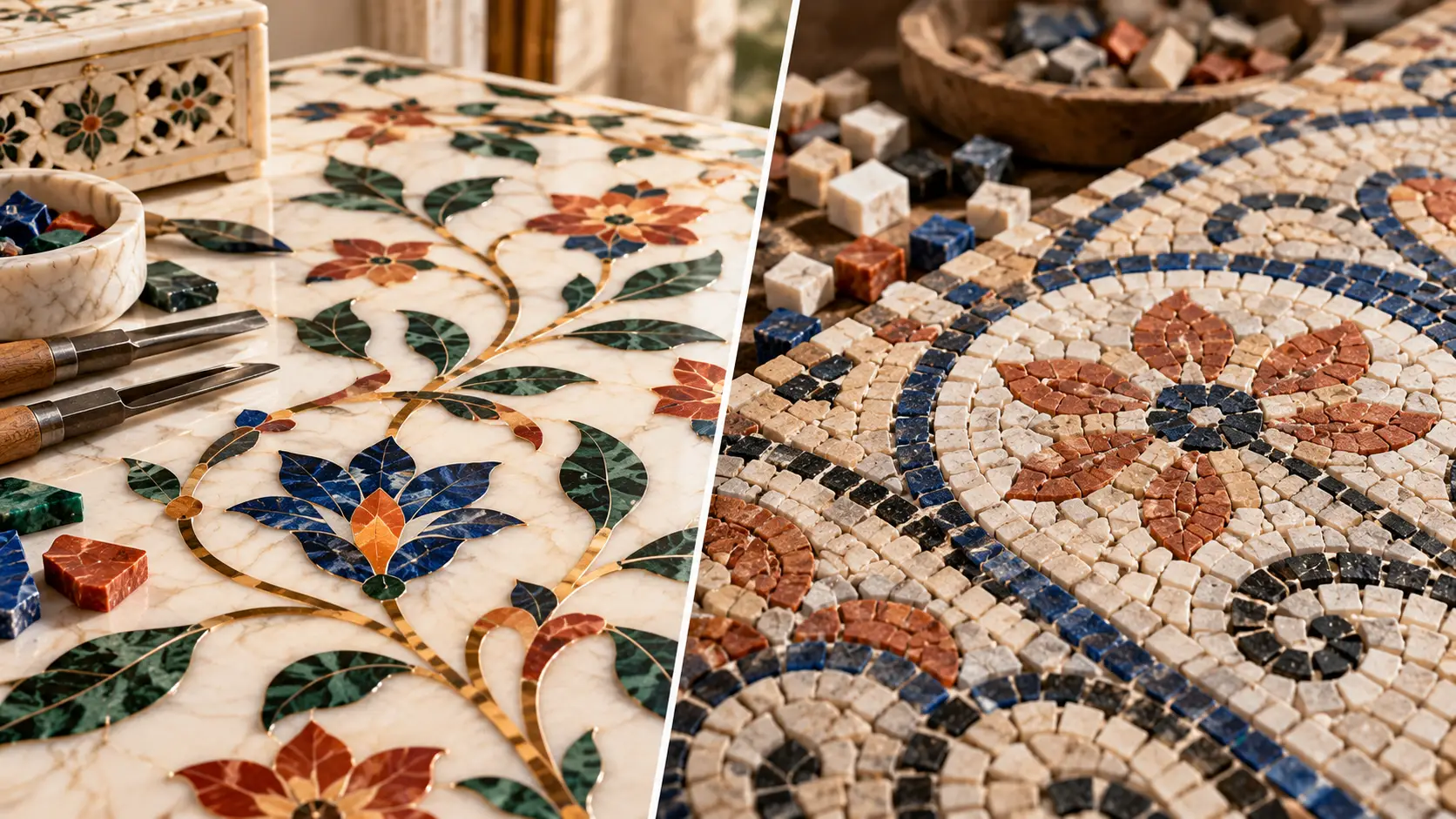
Natural stone has long been valued for its ability to bring beauty, character and permanence to architecture. From intricate decorative walls to elaborate flooring and statement tabletops, stone-based art offers countless possibilities for creating distinctive interiors. Among the techniques used to transform stone into decorative compositions, marble inlay and mosaic are two of the most recognised.
At first glance, these techniques may appear similar. Both use individual pieces of material to create patterns, images and decorative surfaces. However, they differ in their construction methods, design possibilities, visual characteristics and typical applications.
Marble inlay involves fitting carefully shaped pieces of stone into a prepared base, often marble, to create an integrated decorative composition. Mosaic, by comparison, generally involves arranging small pieces of material across a surface to form a pattern or image. These pieces are commonly known as tesserae.
Understanding the difference between marble inlay and mosaic can help homeowners, architects and interior designers select the appropriate technique for a particular project. Whether the objective is to create a refined marble wall panel, a decorative floor medallion or an expressive mosaic feature, the choice depends on the desired appearance, the material, the installation requirements and the overall design concept.
Marble Inlay vs. Mosaic: Understanding the Main Differences
Although marble inlay and mosaic both involve assembling individual pieces to create a decorative design, their construction and visual characteristics can differ considerably.
| Feature | Marble Inlay | Mosaic |
|---|---|---|
| Basic technique | Shaped pieces are fitted into recesses in a stone base | Small pieces are arranged and assembled across a surface |
| Common materials | Marble and selected coloured or decorative stones | Stone, marble, glass, ceramic and other tessera materials |
| Design approach | Often focuses on precise outlines and integrated stone compositions | Often builds patterns or images through the arrangement of many pieces |
| Surface appearance | Can achieve a smooth, integrated finish with carefully fitted pieces | May have visible joints between tesserae, depending on the installation |
| Typical patterns | Floral motifs, botanical designs, medallions and ornamental compositions | Geometric patterns, repeating motifs, figurative designs and abstract arrangements |
| Design flexibility | Well suited to detailed stone compositions and custom dimensions | Well suited to varied patterns, colours, materials and tessellated designs |
| Common applications | Marble wall panels, inlay flooring and decorative tabletops | Feature walls, floors, wet-area surfaces and decorative panels |
| Key consideration | Precision of stone cutting, fitting and finishing | Tessera arrangement, jointing, setting method and installation quality |
These distinctions are general rather than absolute. Mosaic can also be highly intricate, and marble inlay can incorporate geometric patterns. Some decorative projects may even combine elements of both techniques.
The most appropriate choice depends on how the design is constructed, the materials selected and the desired visual effect.
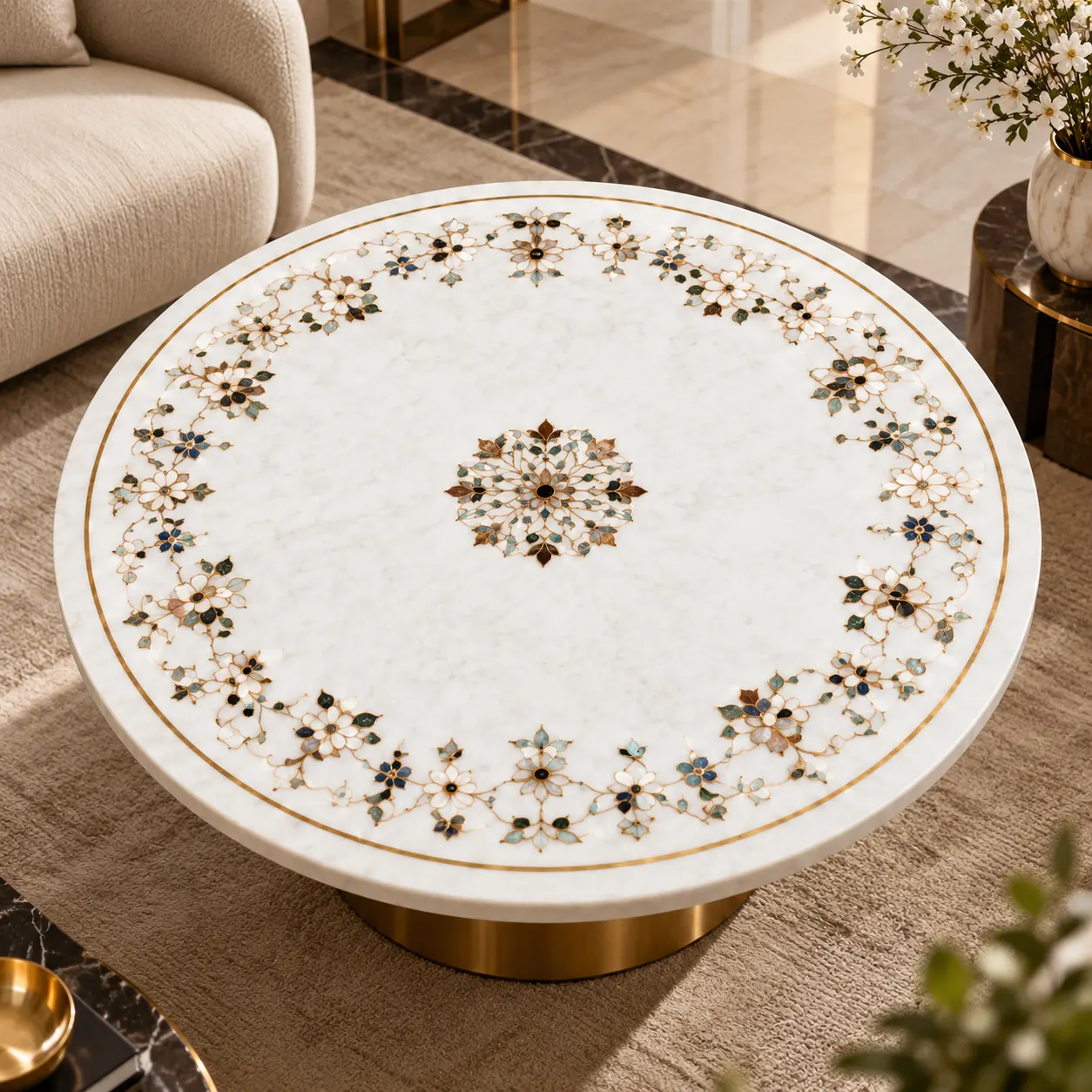
Handcrafted Marble Table Top
Discover handcrafted marble inlay table tops featuring intricate stone patterns and timeless artistry for luxury homes, bespoke furniture, and refined interiors.
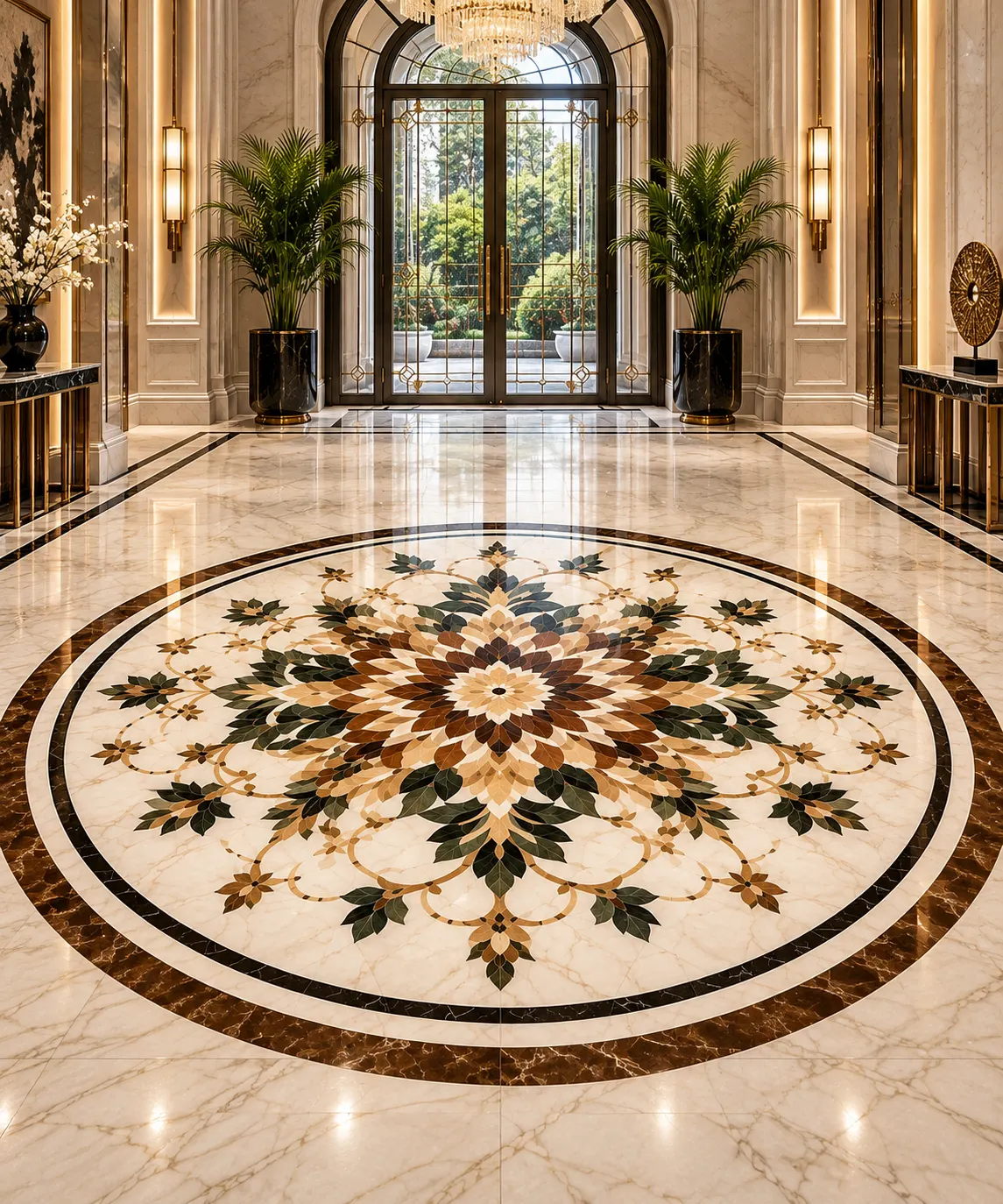
Marble Floor Inlay Art
Explore decorative marble floor inlay designs combining precision-cut natural stones and artistic patterns for elegant residences, luxury hospitality spaces, and architectural interiors.

Marble Inlay Wall Art
Transform interior spaces with artistic marble inlay wall panels and decorative stone compositions, thoughtfully designed for statement walls and sophisticated luxury interiors.
What Is Marble Inlay?
Marble inlay is a decorative technique in which pieces of coloured stone are shaped and fitted into corresponding recesses within a marble or other suitable stone base. The individual pieces form a design that becomes integrated into the surface.
The technique is closely associated with Pietra Dura, a traditional art form known for its detailed floral patterns, botanical compositions and elaborate stonework. In India, a related tradition called Parchin Kari became especially prominent during the Mughal period.
Agra is particularly renowned for its association with marble inlay craftsmanship. The Taj Mahal provides a celebrated example of how coloured stones can be incorporated into white marble to create intricate floral and ornamental compositions.
The process generally begins with a design that determines the shape, position and colour of each element. Suitable stones are selected and cut to match the design. Corresponding recesses are then prepared in the marble base, and the individual pieces are fitted and secured before the surface is finished.
The result is a composition in which the coloured stones and the surrounding marble work together as a unified decorative surface.
Key Characteristics of Marble Inlay
Marble inlay is particularly suited to designs that require precise outlines, carefully controlled colour transitions and a refined finish.
Its defining characteristics include:
- Individually shaped stone pieces fitted into a prepared base.
- Detailed floral, botanical, geometric and ornamental compositions.
- The use of natural stone colours and textures to create contrast.
- A smooth, integrated appearance when properly finished.
- Opportunities for bespoke designs tailored to specific dimensions and architectural requirements.
Marble inlay can be used for decorative wall panels, architectural flooring, floor medallions, tabletops and other bespoke stone surfaces.
Its appeal lies in the relationship between the design and the material itself. Rather than simply decorating a surface, the technique makes the stone an essential part of the artwork.
What Is Mosaic Art?
Mosaic is a decorative technique in which small pieces of material are arranged and assembled to create a pattern, image or overall composition. These individual pieces, known as tesserae, may be made from stone, marble, ceramic, glass or other suitable materials.
Unlike traditional marble inlay, which typically involves fitting shaped pieces into recesses in a base, mosaic commonly uses multiple pieces arranged across a surface and secured with an appropriate adhesive or setting material. The exact construction method varies according to the materials, design and installation.
Mosaic has a long history in architecture and decorative art. It has been used in floors, walls, ceilings, religious buildings, public spaces and private interiors. Historical mosaics often feature geometric arrangements, figurative images and ornamental borders.
Modern mosaic design ranges from simple repeating patterns to elaborate compositions made from numerous small pieces. Glass mosaics can introduce bright colours and reflective qualities, while stone mosaics can provide a more natural and understated appearance.
Key Characteristics of Mosaic
Mosaic offers considerable flexibility in terms of materials, patterns and visual effects.
Its principal characteristics include:
- Small pieces arranged to create a larger composition.
- The use of stone, ceramic, glass and other materials.
- Designs ranging from simple geometric patterns to detailed images.
- Opportunities to create textured, colourful or reflective surfaces.
- Adaptability to floors, walls, decorative panels and selected furniture applications.
The final appearance depends on the size and shape of the tesserae, the spacing between pieces, the materials used and the overall pattern.
Mosaic is especially useful when a design calls for repeated shapes, a tessellated arrangement or a composition built from numerous small elements.
1. Difference in Craftsmanship and Construction
One of the clearest distinctions between marble inlay and mosaic is how the individual pieces are incorporated into the finished surface.
In traditional marble inlay, each stone element is shaped to fit a corresponding recess in the base material. The accuracy of the cut and the fit between adjacent pieces are central to the quality of the composition.
A floral design, for example, may contain separate stone pieces for petals, leaves and stems. Each element must align with the surrounding pieces to preserve the clarity of the pattern.
Mosaic generally follows a different approach. Individual tesserae are arranged to create the overall composition and then secured using a suitable setting system. Depending on the project, the pieces may be mounted on a backing sheet, installed individually or incorporated using other established methods.
Both techniques require skill and careful planning. However, their construction methods influence the way designs are developed, assembled and finished.
2. Difference in Design and Visual Appearance
Marble inlay is often associated with detailed stone compositions in which individual shapes contribute directly to the artwork. Natural variations in the stone provide colour, texture and contrast.
The technique is particularly effective for floral artwork, decorative borders, ornamental medallions and bespoke panels in which precise shapes are important.
Mosaic, meanwhile, can create visual effects through the repeated arrangement of many small pieces. The pattern may rely on repetition, changes in colour, the contrast between tesserae or the overall relationship between individual elements.
For example, a marble inlay panel might feature carefully shaped flowers against a white marble background. A mosaic wall might use numerous small square or irregular pieces to create a repeating geometric pattern.
Neither approach is inherently limited to a particular style. Both can support traditional and contemporary designs, depending on the materials and the artistic concept.
The important difference is how the individual pieces contribute to the overall composition.
3. Difference in Materials
Material selection affects the appearance, suitability and maintenance requirements of both marble inlay and mosaic.
Marble inlay commonly uses marble as the base, with selected coloured stones fitted into it. Depending on the design, these may include lapis lazuli, jasper, onyx, green aventurine and other suitable decorative stones. Mother of pearl may also be incorporated into particular compositions.
Mosaic can accommodate a broader range of materials, including ceramic, glass, natural stone and marble. This variety allows designers to explore different textures, colours, degrees of reflectivity and surface effects.
Glass mosaic, for example, may create a luminous appearance, while natural stone mosaic can emphasise texture and variation.
The right material depends on the intended application. Flooring, wall panels and wet-area installations may have different requirements for slip resistance, moisture exposure, fixing methods and maintenance.
Material selection should therefore be based on both the design concept and the practical conditions of the space.
4. Marble Inlay vs. Mosaic for Flooring
Both techniques can be used to create decorative flooring, but the choice should reflect the architectural concept and the conditions in which the floor will be used.
Marble Inlay Flooring
Marble inlay flooring is often chosen for statement entrances, formal living areas, corridors and other spaces where a decorative stone composition can become an architectural focal point.
Circular medallions, floral patterns and carefully planned borders can introduce detail while maintaining a relationship with the surrounding marble floor.
The design must account for the floor layout, panel dimensions, installation conditions and expected foot traffic. Surface finishing and maintenance are important considerations for long-term performance.
Mosaic Flooring
Mosaic flooring can be useful for repeated patterns, decorative transitions and compositions that rely on numerous small pieces.
Depending on the material and installation, mosaic can be suitable for a range of interiors, including certain wet areas. However, slip resistance, grout selection, water exposure and cleaning requirements must be evaluated for the intended use.
The decision should not be based on appearance alone. The construction system, material properties and installation quality are essential to the suitability of either technique.
5. Marble Inlay vs. Mosaic for Wall Art
Walls provide a flexible setting for both decorative techniques, allowing designers to introduce colour, pattern and visual interest without necessarily changing the structure of a room.
Marble inlay wall panels are often selected for intricate stone compositions, botanical artwork and refined decorative features. They can be designed around a particular wall’s dimensions and integrated with the surrounding architecture.
Mosaic wall art offers a different set of possibilities. Small pieces of glass, stone or ceramic can be assembled into repeating patterns, abstract compositions or detailed images. The choice of material can also influence the reflectivity and texture of the finished surface.
In a formal living room or luxury entrance, a bespoke marble inlay panel may suit a design concept centred on natural stone and detailed craftsmanship. In a contemporary bathroom or decorative feature wall, mosaic may be appropriate where the selected materials and installation system meet the requirements of the space.
The final decision should consider the visual character of the room, the scale of the artwork and the desired relationship between the surface and its surroundings.
6. Which Technique Is Better for Tabletops?
Marble inlay and mosaic can both be incorporated into decorative furniture, although their suitability depends on the design and construction.
Marble inlay tabletops can feature central motifs, ornamental borders or detailed compositions created from shaped stones. These designs are often developed around the dimensions and form of the table.
Mosaic tabletops can use small pieces arranged into geometric patterns, decorative images or colourful compositions. Depending on the materials and setting method, the finished surface may have visible joints or a more continuous appearance.
For either technique, the tabletop must be designed with its intended use in mind. Surface durability, edge treatment, resistance to spills, cleaning requirements and the stability of the construction all matter.
Where a refined, stone-based composition is the primary objective, bespoke marble inlay may be worth considering. Where a pattern built from numerous small tesserae is desired, mosaic may be the more appropriate approach.
How to Choose Between Marble Inlay and Mosaic
The best choice depends on the project’s artistic goals, materials, budget, installation conditions and maintenance requirements.
Consider the following factors before making a decision:
Design complexity: Determine whether the design depends on individually shaped stone elements or on a composition assembled from many small pieces.
Material preference: Decide whether natural marble and coloured stones are central to the desired appearance or whether glass, ceramic and other mosaic materials are suitable.
Architectural setting: Consider the dimensions of the surface, the surrounding finishes and the visual role the artwork will play.
Installation requirements: Evaluate the substrate, fixing system, surface levels and the technical requirements of the selected materials.
Maintenance: Ask about cleaning, sealing, grout care and other requirements relevant to the specific installation.
Craftsmanship: Review completed work and close-up details to understand the precision of the construction and the quality of the finish.
“The finest decorative surfaces are created when material, craftsmanship and design work together as one considered composition.”
This principle applies to both marble inlay and mosaic. Their visual appeal depends not simply on the materials used, but on how successfully those materials are selected, assembled and integrated into the space.
Can Marble Inlay and Mosaic Be Used Together?
Yes. In some projects, the two techniques can complement one another.
A designer might use a marble inlay medallion as the central feature of a larger floor, with a different decorative treatment surrounding it. A wall installation might combine a detailed stone composition with a broader mosaic border.
Such combinations require careful planning. The materials must be compatible with their intended applications, and differences in thickness, fixing systems, joints and finishing must be addressed.
The design should also maintain a clear visual hierarchy. If both techniques are highly detailed, the overall composition may become crowded. A more restrained approach can allow each element to contribute to the space without competing for attention.
When appropriately planned, combining decorative techniques can create a distinctive architectural result.
Why Marble Inlay Remains Relevant in Luxury Interiors
Marble inlay continues to appeal to designers and homeowners who value natural materials, detailed craftsmanship and individual design.
Its connection to India’s architectural heritage gives the technique a distinctive cultural context, while its adaptability allows it to be used in contemporary spaces.
From custom floor medallions to decorative wall panels and artistic tabletops, bespoke marble inlay can be developed around the dimensions, colours and character of a particular project.
Its suitability depends on careful material selection, precise execution and appropriate installation. When these factors are considered from the beginning, marble inlay can become an integral part of an interior rather than an isolated decorative addition.
Discover Marble Inlay Art with Zenvira Atelier
Rooted in Agra, India, Zenvira Atelier focuses on marble inlay for walls, floors and tabletops, bringing the visual language of traditional stone craftsmanship into contemporary interiors.
The atelier’s approach centres on the relationship between natural materials, artistic composition and architectural design. From decorative wall panels to bespoke flooring concepts and statement tabletops, marble inlay offers different ways to introduce distinctive character into a space.
For architects, interior designers, hospitality professionals and homeowners, understanding the difference between marble inlay and mosaic is an important step towards choosing the right decorative approach.
Where a project calls for the precision of shaped stone, a refined marble composition or a design developed around a particular architectural surface, bespoke marble inlay offers considerable creative possibilities.
At Zenvira Atelier, this enduring craft provides a connection between India’s artistic heritage and the evolving requirements of contemporary spaces.
“Every carefully placed stone contributes to a larger vision, transforming natural material into an expression of art.”
Explore the possibilities of marble inlay wall art, flooring and tabletops at Zenvira Atelier, and connect with the atelier through the website to discuss your project requirements.
Contact Us:
WhatsApp Support (India): +91 9621292929
Business Email ID: info@zenviraatelier.com
FAQ’s
1. What is the difference between marble inlay and mosaic?
Marble inlay involves fitting precisely cut pieces of contrasting stone or other decorative materials into a base surface to create a design. Mosaic involves arranging small pieces of stone, marble, glass, ceramic or other materials to form a pattern or image. Marble inlay often emphasises detailed craftsmanship and a relatively integrated surface, while mosaic is commonly created by assembling individual pieces across a surface.
2. Is marble inlay better than mosaic?
Neither technique is universally better; the right choice depends on the design, application, budget and desired finish. Marble inlay is particularly suitable for bespoke artistic panels, decorative tabletops, intricate floor medallions and refined architectural features. Mosaic offers flexibility for repeating patterns, textured surfaces, decorative flooring and larger-scale compositions.
3. Is Pietra Dura the same as marble inlay or mosaic?
Pietra Dura is a traditional stone-inlay technique in which carefully shaped pieces of coloured stone are fitted together to create intricate decorative designs, often on a marble base. It is a specialised form of stone inlay rather than a synonym for every type of marble inlay or mosaic. The term mosaic generally refers to compositions assembled from small individual pieces of material.
4. Which is more expensive: marble inlay or mosaic?
The cost of marble inlay and mosaic varies according to material quality, design complexity, piece size, labour and installation requirements. Intricate bespoke marble inlay can be expensive because each stone piece requires precise cutting and fitting. Mosaic costs also vary considerably, particularly when premium materials, detailed patterns or specialised installation are involved.
5. What materials are used in marble inlay and mosaic?
Marble inlay commonly uses a marble base with contrasting coloured marble, onyx, lapis lazuli, agate, jasper, other natural stones or selected decorative materials. Mosaic can incorporate marble, natural stone, glass, ceramic, porcelain and other materials. The choice depends on the intended appearance, application and performance requirements.
6. Can marble inlay and mosaic be used for flooring?
Yes. Both techniques can be used for decorative flooring. Marble inlay is often chosen for custom floor medallions, intricate borders, central motifs and bespoke stone compositions. Mosaic is frequently used for repeating patterns, decorative sections and designs made from smaller individual pieces. Slip resistance, surface finish, maintenance and installation quality should be considered for both.
7. Which is better for luxury wall panels: marble inlay or mosaic?
Marble inlay is an excellent option for luxury wall panels featuring detailed floral artwork, elegant geometric patterns, bespoke murals and contrasting natural stones. Mosaic can be preferable for designs that benefit from smaller repeated elements, varied textures or a tessellated appearance. The best choice depends on the artistic concept and the interior’s overall design language.
8. What is the difference between marble inlay and mosaic tabletops?
A marble inlay tabletop typically features decorative stone pieces fitted into a marble surface to form a refined, integrated composition. A mosaic tabletop is created by arranging multiple small pieces of material into a pattern, which may have visible joints between individual pieces. Both can create distinctive furniture, but the construction method and final appearance depend on the specific design.
9. How do you maintain marble inlay and mosaic surfaces?
Both surfaces require appropriate cleaning and care. Use a soft cloth or mop and a pH-neutral cleaner suitable for the materials. Avoid acidic chemicals and abrasive cleaning tools, especially on marble and other sensitive natural stones. Mosaic surfaces may require additional attention to grout joints, while marble inlay surfaces need care to protect the stone finish and fitted pieces.
10. Where can you find bespoke marble inlay designs in India?
Agra is one of India’s best-known centres for traditional marble inlay craftsmanship. Buyers, architects and interior designers can explore specialist ateliers for customised wall panels, flooring, decorative medallions and tabletops. Zenvira Atelier focuses on marble inlay for walls, floors and tabletops, bringing traditional stone craftsmanship into contemporary luxury interiors through considered designs and bespoke decorative applications.