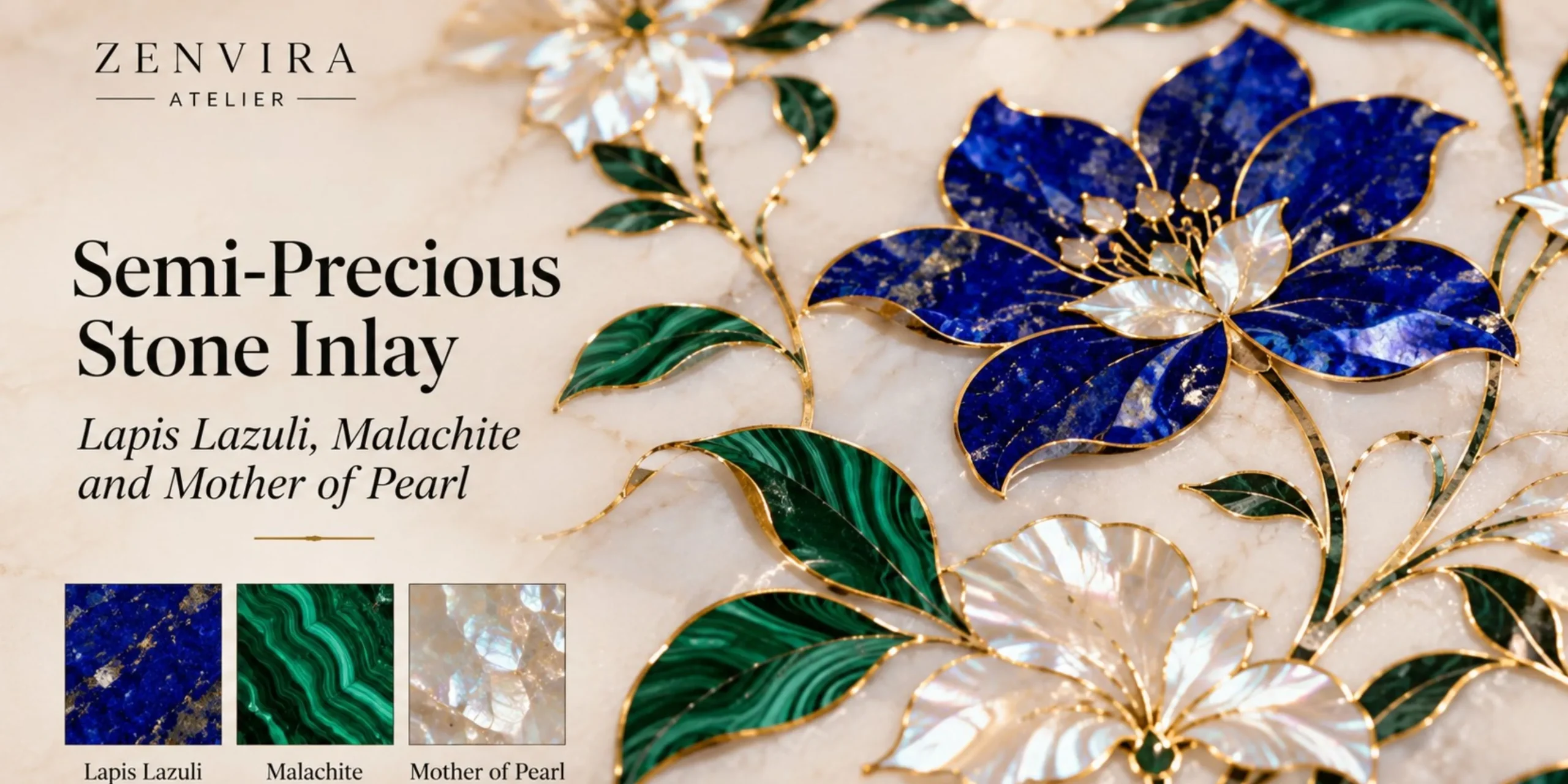
Natural stone has always held a special place in architecture and decorative art. Its colours, textures and natural patterns offer a depth of character that manufactured materials often struggle to reproduce. When these materials are carefully shaped and incorporated into marble through traditional inlay techniques, they become part of an artistic composition that combines craftsmanship with the natural beauty of stone.
Among the materials used in decorative marble inlay, semi-precious stones are particularly admired for their distinctive colours and visual qualities. Lapis lazuli, malachite and mother of pearl are three exceptional materials that can transform a simple marble surface into an intricate work of art.
From deep blue floral details and rich green botanical patterns to the delicate iridescence of mother of pearl, each material introduces a different character to the finished design.
In India, the tradition of incorporating coloured stones into marble is closely associated with Agra and the historic art of Parchin Kari. Today, this craftsmanship continues to inspire contemporary applications, including bespoke marble inlay wall panels, decorative flooring, tabletops and architectural installations.
Understanding the characteristics of these materials helps architects, interior designers and homeowners make informed choices when developing distinctive stone inlay designs.
What Is Semi-Precious Stone Inlay?
Semi-precious stone inlay is a decorative technique in which individually shaped pieces of natural decorative stone are incorporated into a base material, commonly marble, to create patterns, images or ornamental compositions.
The technique is associated with Pietra Dura, an art form recognised for its detailed use of coloured stones. In India, the related tradition of Parchin Kari developed into an important form of decorative craftsmanship, particularly during the Mughal period.
Unlike printed patterns or applied surface decoration, stone inlay uses actual pieces of natural material to create the design. Each element is shaped according to the composition and carefully fitted into a prepared recess in the marble base.
Semi-precious stones introduce a distinctive visual quality because their colours and patterns are naturally formed. No two pieces are necessarily identical, and this variation contributes to the individuality of the finished artwork.
The selection of stones depends on the intended design, the desired colour palette and the requirements of the final application.
Comparing Lapis Lazuli, Malachite and Mother of Pearl
Although all three materials are used in decorative inlay, their natural characteristics and visual effects are quite different.
| Feature | Lapis Lazuli | Malachite | Mother of Pearl |
|---|---|---|---|
| Material type | Natural decorative rock | Copper carbonate mineral | Organic nacre from mollusc shells |
| Main colour | Deep and royal blue | Light to dark green | White, cream and iridescent tones |
| Natural pattern | Blue variations and possible pyrite inclusions | Distinctive green bands and rings | Layered iridescent appearance |
| Visual character | Rich and dramatic | Organic and expressive | Delicate and luminous |
| Design applications | Floral details, borders and geometric motifs | Botanical designs and decorative patterns | Fine highlights and ornamental details |
| Common combinations | White marble, green stones and mother of pearl | White marble, lapis lazuli and other coloured stones | Dark marble, lapis lazuli and malachite |
| Main consideration | Natural colour variation and material quality | Relative softness and careful finishing | Thickness, handling and suitable application |
Each material has its own artistic potential. The best selection depends on the overall design, the intended surface and the desired relationship between colour and natural stone.
1. Lapis Lazuli: The Timeless Beauty of Deep Blue Stone
Lapis lazuli is one of the most recognisable decorative stones used in traditional and contemporary artistic applications. Its rich blue colour, sometimes accompanied by natural golden-coloured pyrite inclusions, gives it a distinctive appearance.
Historically valued for jewellery, ornamental objects and decorative art, lapis lazuli has also been used in stone inlay compositions where its deep colour creates a striking contrast against lighter marble backgrounds.
Natural Characteristics of Lapis Lazuli
Lapis lazuli is a rock composed primarily of lazurite, along with other minerals such as calcite and pyrite. Its colour generally ranges from deep royal blue to lighter blue shades, depending on its composition.
Some pieces feature small golden-coloured inclusions, while others have a more uniform blue appearance.
These natural characteristics make the stone particularly suitable for decorative designs where colour contrast is important.
Lapis Lazuli in Marble Inlay Art
In marble inlay, lapis lazuli can be shaped into small elements for floral patterns, decorative borders, geometric arrangements and artistic motifs.
Its deep blue colour works particularly well against white and ivory marble. It can also be combined with green, red and other coloured stones to create more elaborate compositions.
Common applications include:
- Floral marble inlay wall panels.
- Decorative floor medallions.
- Geometric marble inlay patterns.
- Bespoke marble tabletops.
- Ornamental borders and architectural details.
In contemporary interiors, lapis lazuli can introduce a strong accent without requiring an excessively elaborate pattern.
Why Designers Appreciate Lapis Lazuli
The appeal of lapis lazuli lies in its distinctive blue colour and the natural variation found within the stone.
For designers working with neutral interiors, it can introduce contrast and visual interest. In more decorative settings, it can become part of a complex colour composition.
Its suitability for a particular project depends on the quality and characteristics of the selected stone, the scale of the design and the intended application.
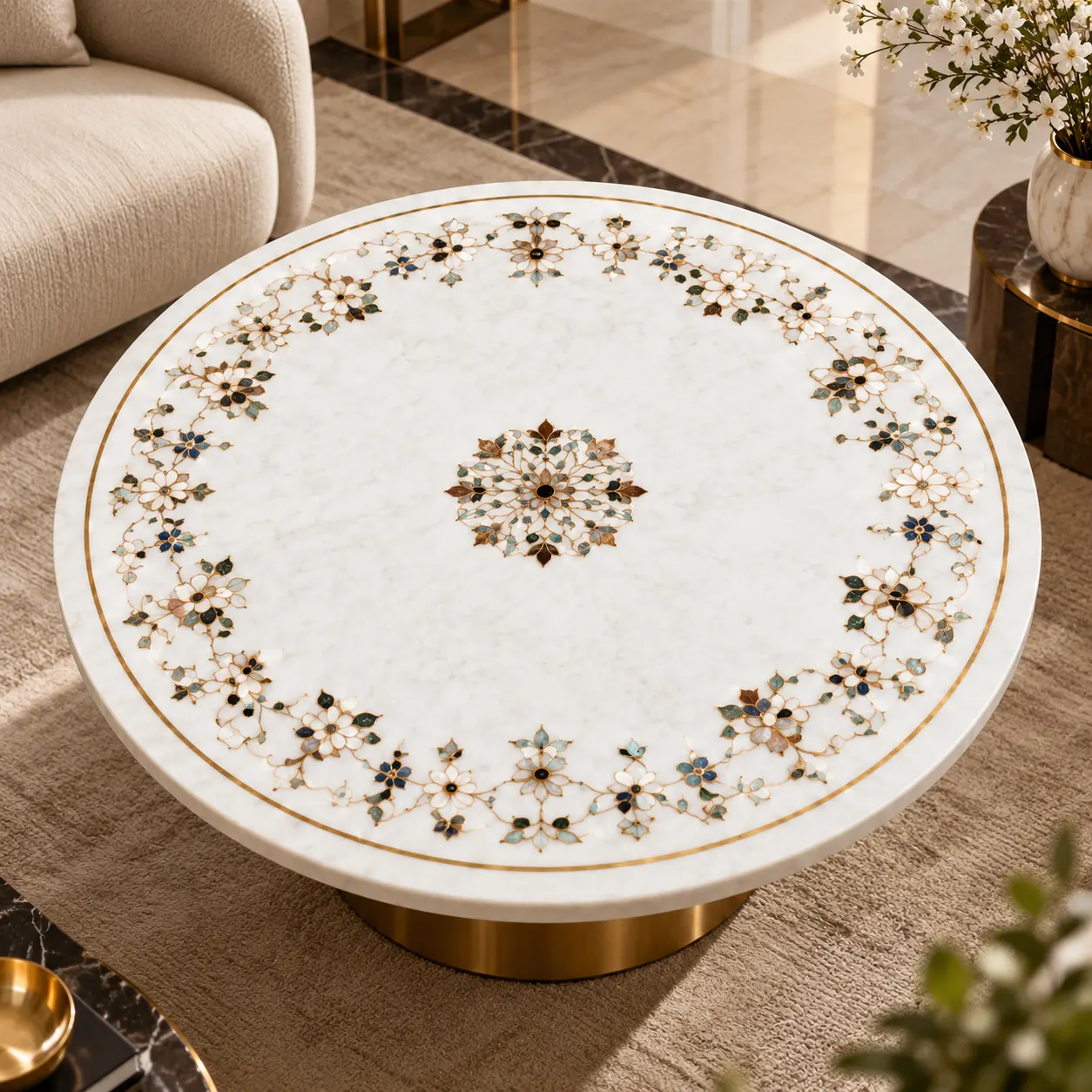
Handcrafted Marble Table Top
Discover handcrafted marble inlay table tops featuring intricate stone patterns and timeless artistry for luxury homes, bespoke furniture, and refined interiors.
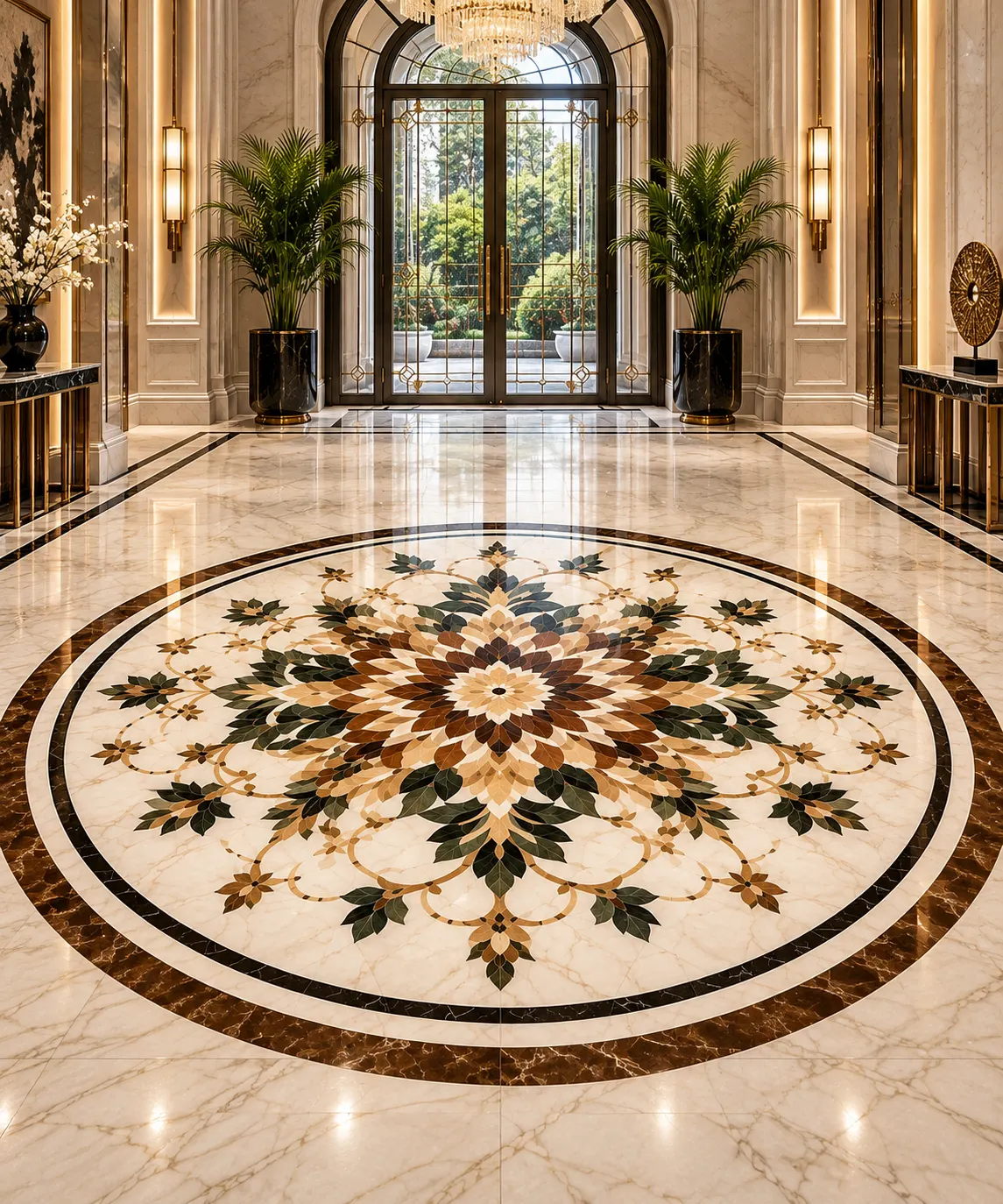
Marble Floor Inlay Art
Explore decorative marble floor inlay designs combining precision-cut natural stones and artistic patterns for elegant residences, luxury hospitality spaces, and architectural interiors.

Marble Inlay Wall Art
Transform interior spaces with artistic marble inlay wall panels and decorative stone compositions, thoughtfully designed for statement walls and sophisticated luxury interiors.
2. Malachite: The Rich Green Character of Natural Stone
Malachite is a copper carbonate mineral known for its intense green colour and characteristic banded patterns.
Its appearance is particularly distinctive because different shades of green form natural concentric rings, curved bands and flowing patterns. These markings create an expressive visual quality that can make each piece appear almost like an abstract painting.
Malachite has been valued in decorative objects, jewellery and ornamental applications for centuries.
Natural Characteristics of Malachite
The most recognisable feature of malachite is its green colour, which ranges from lighter shades to deep, saturated tones.
Its natural banding can produce circular, wavy or irregular patterns. These patterns are formed through the mineral’s natural structure and are an important part of its decorative appeal.
Because malachite contains copper, it requires appropriate handling and finishing. It is also relatively soft compared with many other decorative stones, making material selection and application particularly important.
Malachite in Marble Inlay Art
Malachite can introduce rich green accents into marble inlay compositions.
It is especially effective in botanical designs, where its natural colour complements representations of leaves, stems and foliage.
It may also be incorporated into geometric patterns, ornamental borders and contemporary decorative artwork.
Common applications include:
- Green botanical marble inlay panels.
- Decorative marble tabletops.
- Artistic wall compositions.
- Floral floor medallions.
- Bespoke decorative stone features.
When paired with white marble, malachite creates a noticeable contrast. When combined with other coloured stones, it can contribute to a more elaborate decorative palette.
Why Malachite Is Valued in Luxury Interiors
Malachite offers a natural green palette that is difficult to reproduce through artificial decoration.
Its flowing patterns can complement interiors featuring natural wood, neutral stone, brass accents and carefully selected fabrics.
However, its relatively soft nature means that it should be selected and used thoughtfully, particularly for surfaces exposed to frequent handling or wear.
3. Mother of Pearl: The Delicate Iridescence of Natural Shell
Mother of pearl, also known as nacre, is the iridescent inner layer found in the shells of certain molluscs.
Unlike lapis lazuli and malachite, which are mineral materials, mother of pearl is an organic material. Its distinctive appearance comes from the way light interacts with its layered structure, creating subtle reflections and changing colours.
Depending on the variety and orientation, mother of pearl can display white, cream, pink, silver and soft rainbow-like tones.
It has been used in decorative arts, furniture, jewellery and ornamental craftsmanship for centuries.
Natural Characteristics of Mother of Pearl
Mother of pearl is recognised for its smooth surface and delicate iridescence.
Its appearance changes according to the angle of light, giving it a visual quality that differs from opaque stones.
This makes it particularly useful for designs that require subtle highlights rather than strong blocks of colour.
The material is generally supplied in thin sections or pieces suitable for decorative applications. Its thickness, quality and suitability must be considered during the design and fitting process.
Mother of Pearl in Marble Inlay
In marble inlay, mother of pearl can be used to create delicate details within floral patterns, decorative motifs and artistic compositions.
Its reflective quality works particularly well against darker marble backgrounds, where the contrast makes its natural sheen more visible.
It can also be combined with lapis lazuli and malachite to create compositions that bring together blue, green and iridescent white tones.
Common applications include:
- Mother of pearl floral marble panels.
- Decorative wall art.
- Luxury marble tabletops.
- Ornamental medallions.
- Fine detailing in bespoke stone compositions.
Why Designers Choose Mother of Pearl
Mother of pearl introduces a softer decorative quality compared with strongly coloured natural stones.
It can create subtle highlights in a detailed composition and complement interiors where refined materials and delicate finishes are preferred.
Its iridescence also means that the artwork can appear slightly different under changing lighting conditions, adding another dimension to the finished surface.
4. How These Stones Work Together in Marble Inlay
One of the most interesting possibilities in semi-precious stone inlay is the combination of different materials within a single composition.
Lapis lazuli, malachite and mother of pearl offer three distinct visual qualities. Their combination can create a balanced composition that brings together deep blue, natural green and delicate iridescent highlights.
For example, a floral marble inlay panel may use malachite for leaves, lapis lazuli for selected decorative elements and mother of pearl for delicate highlights.
A darker marble background can create a dramatic setting for these materials, while white marble can provide a lighter and more traditional appearance.
The design should consider the natural patterns and colours of the stones rather than treating them as uniform manufactured materials.
The scale of each element is also important. Small details may require carefully selected pieces with suitable patterns and colours, while larger areas may benefit from a more restrained arrangement.
The objective is to achieve a composition in which each material contributes to the overall artwork without competing with the others.
5. Semi-Precious Stone Inlay for Luxury Wall Panels
Decorative marble inlay wall panels offer an opportunity to display the individual characteristics of coloured stones at an architectural scale.
A large wall panel can accommodate intricate botanical designs, floral compositions, ornamental patterns and contemporary artwork.
Lapis lazuli can introduce deep blue details, malachite can create natural green foliage and mother of pearl can add subtle highlights.
These materials can be selected according to the intended atmosphere of the interior.
Suitable Spaces
Semi-precious stone inlay wall panels can be considered for:
- Formal living rooms.
- Grand entrance halls.
- Luxury villa interiors.
- Hotel reception areas.
- Private dining spaces.
- Bespoke architectural installations.
The dimensions, lighting and surrounding materials should be considered before finalising the composition.
For large installations, the design may need to be divided into coordinated panels to accommodate transport and installation requirements.
6. Semi-Precious Stone Inlay for Luxury Flooring
Marble inlay flooring can introduce decorative stone compositions into entrance halls, formal living areas and grand residential spaces.
Semi-precious stones can be used for selected details within floor medallions, borders and geometric patterns.
A floral floor medallion may incorporate green and blue stones to create contrast against a light marble background. More restrained compositions can use only a few coloured elements to complement contemporary interiors.
For flooring applications, material suitability is particularly important. The selected stones, surface finish and installation method must be appropriate for foot traffic and maintenance requirements.
Because some decorative stones are softer than conventional flooring materials, their placement and exposure to wear should be carefully evaluated.
7. Semi-Precious Stone Inlay for Bespoke Tabletops
Tabletops offer a closer viewing experience, making them particularly suitable for intricate stone inlay designs.
A bespoke marble tabletop may feature a floral centrepiece, geometric border or an artistic arrangement of coloured stones.
Lapis lazuli can provide strong blue accents, malachite can introduce green patterns and mother of pearl can add delicate decorative highlights.
The pattern should be developed around the dimensions and shape of the furniture, whether the tabletop is circular, square, rectangular or oval.
Practical considerations include surface protection, edge finishing, cleaning requirements and the intended use of the furniture.
A well-planned tabletop balances decorative detail with the practical requirements of a functional surface.
8. From Natural Stone to Handcrafted Inlay: The Making Process
Creating semi-precious stone inlay involves a sequence of carefully coordinated stages.
Design development: The composition is prepared according to the intended dimensions, colour palette and application.
Stone selection: Suitable pieces of lapis lazuli, malachite, mother of pearl and other decorative materials are selected.
Cutting and shaping: Individual elements are cut to match the outlines of the design.
Marble surface preparation: Corresponding recesses are created in the marble base.
Fitting and securing: Each shaped element is positioned and secured using suitable materials and methods.
Finishing and inspection: The surface is finished according to the characteristics of the materials and checked for alignment, consistency and overall quality.
Each stage requires attention to the physical characteristics of the selected materials.
For example, mother of pearl needs careful handling because of its relatively thin decorative sections, while malachite requires appropriate cutting and finishing because of its softness.
The quality of the completed composition depends on the relationship between design accuracy, material selection, fitting and finishing.
9. How to Select the Right Semi-Precious Stones for Your Project
Selecting the right decorative stones involves more than choosing attractive colours. The materials must work together as part of a considered design.
Start with the design concept: Decide whether the composition should be traditional, contemporary, floral, geometric or abstract.
Choose the background marble: The background influences how strongly the colours of the decorative stones will stand out.
Establish the colour balance: Consider whether the project requires strong contrast or a more subtle combination of materials.
Evaluate the application: A wall panel, floor and tabletop have different practical requirements. The physical properties of each material should be considered accordingly.
Review natural variations: Samples should be examined to understand the actual colour, pattern and quality of the stones.
Consider maintenance: Cleaning and care requirements vary between materials. The finished installation should be maintained using suitable methods.
These decisions help create a composition that is visually balanced and appropriate for its intended setting.
“The beauty of natural stone lies in its individuality; every colour, vein and reflection contributes to an artwork that cannot be exactly repeated.”
This is particularly true of semi-precious stone inlay, where the natural characteristics of each material become part of the artistic expression.
10. Caring for Semi-Precious Stone Inlay
Proper care helps preserve the appearance of decorative stone compositions.
Different materials respond differently to cleaning products, moisture and physical contact, so maintenance should be tailored to the actual materials used.
For marble and natural stone surfaces, use suitable pH-neutral cleaning products and avoid acidic cleaners. Mother of pearl should be protected from harsh chemicals and abrasive treatment.
Malachite requires particular care because of its relative softness. Avoid aggressive polishing or abrasive cleaning methods.
Lapis lazuli should also be cleaned gently, using methods recommended for the specific finish and installation.
For larger architectural installations, professional maintenance advice can help preserve the surface over time.
The correct care routine should always be established according to the complete material composition rather than assuming that all stones can be treated in the same way.
11. Zenvira Atelier: The Art of Semi-Precious Stone Inlay
Rooted in Agra, India, Zenvira Atelier focuses on marble inlay for walls, floors and tabletops, bringing the visual language of traditional stone craftsmanship into contemporary interiors.
The atelier’s approach centres on the relationship between natural materials, artistic composition and architectural design. Semi-precious stones offer distinctive possibilities within this approach, allowing different colours, patterns and textures to become part of a carefully considered marble composition.
Lapis lazuli can introduce deep blue accents, malachite can contribute rich natural greens, and mother of pearl can bring delicate iridescent details to selected designs.
These materials can be explored in decorative wall panels, bespoke flooring concepts and handcrafted tabletops, depending on the project’s aesthetic and practical requirements.
For architects, interior designers, hospitality professionals and homeowners, semi-precious stone inlay offers an opportunity to incorporate the natural beauty of decorative materials into distinctive interior spaces.
At Zenvira Atelier, the enduring appeal of marble inlay lies in the connection between India’s artistic heritage, natural stone and contemporary design.
Whether you are considering a statement wall panel, an ornamental floor medallion or a bespoke marble tabletop, the right combination of materials can help transform a surface into a distinctive artistic feature.
“When the natural colours of stone meet the precision of handcrafted artistry, every surface becomes a celebration of material and imagination.”
Discover the possibilities of marble inlay at Zenvira Atelier.
For project enquiries, visit the website to connect with the atelier and discuss your requirements for marble inlay wall panels, decorative flooring, tabletops and bespoke stone compositions.
Contact Us:
WhatsApp Support (India): +91 9621292929
Business Email ID: info@zenviraatelier.com
Website: zenviraatelier.com
FAQ’S
1. What is semi-precious stone inlay?
Ans- Semi-precious stone inlay is a decorative art technique in which carefully cut and shaped pieces of natural gemstones and ornamental materials are fitted into a marble or stone surface to create intricate patterns and artistic compositions. Materials such as lapis lazuli, malachite, agate, turquoise and mother of pearl are commonly used to add rich colours, natural textures and distinctive details to luxury marble inlay artwork.
2. What is lapis lazuli used for in marble inlay art?
Ans- Lapis lazuli is a deep-blue semi-precious stone valued for its intense colour and distinctive natural appearance. In marble inlay art, it is used to create floral details, decorative borders, geometric patterns and artistic highlights. Its rich blue colour creates a striking contrast against white marble and can bring depth and elegance to bespoke wall panels, flooring and tabletops.
3. What is malachite and why is it popular in stone inlay?
Ans- Malachite is a naturally occurring green mineral recognised for its distinctive light and dark green banding. It is popular in decorative stone inlay because of its unique patterns and vibrant colour. Artisans use carefully cut malachite pieces in floral compositions, botanical motifs, decorative medallions and luxury marble panels to create visually striking natural stone designs.
4. What is mother of pearl inlay?
Ans- Mother of pearl is the iridescent inner layer of certain mollusc shells, known for its delicate shine and changing colours. It is used as an ornamental inlay material in decorative artwork, furniture and luxury interior elements. When incorporated into marble inlay designs, mother of pearl creates subtle luminous details and elegant contrasts with natural stone.
5. What is the difference between lapis lazuli, malachite and mother of pearl?
Ans- Each material offers a distinctive appearance and decorative quality:
| Material | Colour and appearance | Common decorative use |
|---|---|---|
| Lapis Lazuli | Deep royal blue, sometimes with golden pyrite flecks | Floral details, borders and artistic accents |
| Malachite | Rich green with natural banded patterns | Botanical motifs, medallions and decorative panels |
| Mother of Pearl | Iridescent white with subtle rainbow reflections | Delicate patterns, highlights and ornamental details |
These materials can also be combined in bespoke compositions to create visually balanced marble inlay artwork.
6. Can semi-precious stones be combined in a single marble inlay design?
Ans- Yes. Different semi-precious stones can be combined to create intricate and colourful compositions. For example, lapis lazuli can provide deep-blue accents, malachite can introduce natural green tones, and mother of pearl can add luminous highlights. The combination of these materials allows artisans to create customised floral artwork, geometric patterns, decorative wall panels and statement tabletops.
7. Is semi-precious stone inlay suitable for luxury interiors?
Ans- Yes. Semi-precious stone inlay is particularly suitable for luxury interiors where natural materials, detailed craftsmanship and distinctive decorative elements are important. It can be incorporated into bespoke marble wall panels, decorative flooring, floor medallions, dining tabletops and architectural installations. The natural colours and textures of the stones can complement both traditional and contemporary interior styles.
8. How is semi-precious stone inlay made?
Ans- The process involves several stages of specialised craftsmanship:
-
Design Development: Preparing a detailed pattern or customised artwork.
-
Stone Selection: Selecting suitable stones based on colour, texture and design requirements.
-
Precision Cutting: Cutting lapis lazuli, malachite and other materials into individual shapes.
-
Marble Preparation: Creating accurately shaped recesses in the marble base.
-
Stone Fitting: Carefully fitting and securing each individual piece.
-
Polishing: Refining the surface to achieve a smooth and balanced finish.
The process requires skilled artisans, careful material selection and considerable attention to detail.
9. How do you maintain semi-precious stone inlay artwork?
Ans- Semi-precious stone inlay requires appropriate care to preserve its natural appearance. Clean surfaces with a soft cloth and a suitable pH-neutral stone cleaner. Avoid acidic chemicals, abrasive materials and harsh cleaning products. Some materials, particularly softer or more delicate decorative stones and shell inlays, may require specialised care. Follow material-specific maintenance recommendations for long-term preservation.
10. Where can you find semi-precious stone inlay art in India?
Ans- Agra is one of India’s most recognised centres for traditional marble inlay craftsmanship. Its artisans have preserved generations of knowledge in working with coloured stones and intricate decorative patterns.
Zenvira Atelier, based in Agra, India, focuses on bespoke marble inlay for walls, floors and tabletops. Its design approach brings traditional Indian stone artistry together with carefully selected natural materials, including semi-precious stones, to create distinctive decorative solutions for luxury residences, hotels and architectural interiors.
Explore the collections at www.zenviraatelier.com