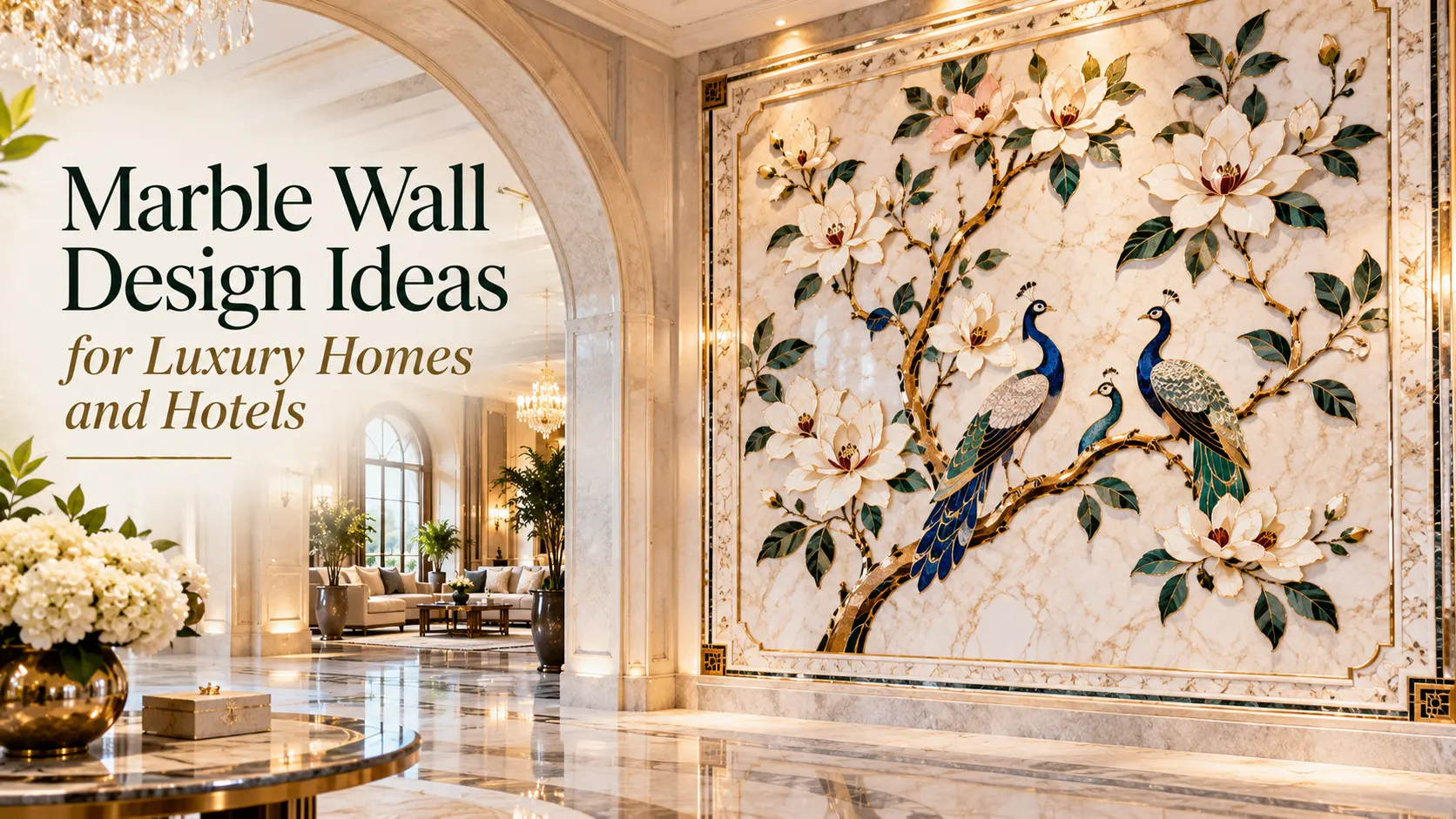
Marble has long been associated with elegance, permanence and architectural refinement. From the grand palaces of the past to contemporary luxury residences and five-star hotels, natural marble continues to hold a distinctive place in interior design. Its organic veining, subtle colour variations and timeless appeal make it an exceptional material for creating walls that are more than simple architectural surfaces.
In modern luxury interiors, marble walls are no longer limited to polished stone cladding. Designers are exploring artistic compositions, bookmatched slabs, sculptural textures, decorative borders and intricate marble inlay work to create distinctive spaces. A carefully designed marble wall can become the focal point of a living room, an elegant backdrop in a hotel lobby or an artistic feature within a private villa.
Whether used across an entire wall or introduced as a carefully positioned decorative panel, marble offers remarkable design flexibility. The right combination of stone, pattern, scale, lighting and surrounding materials can transform an ordinary interior into a sophisticated architectural experience.
This guide explores inspiring marble wall design ideas for luxury homes and hotels, along with material choices, decorative techniques and practical considerations for creating distinctive marble interiors.
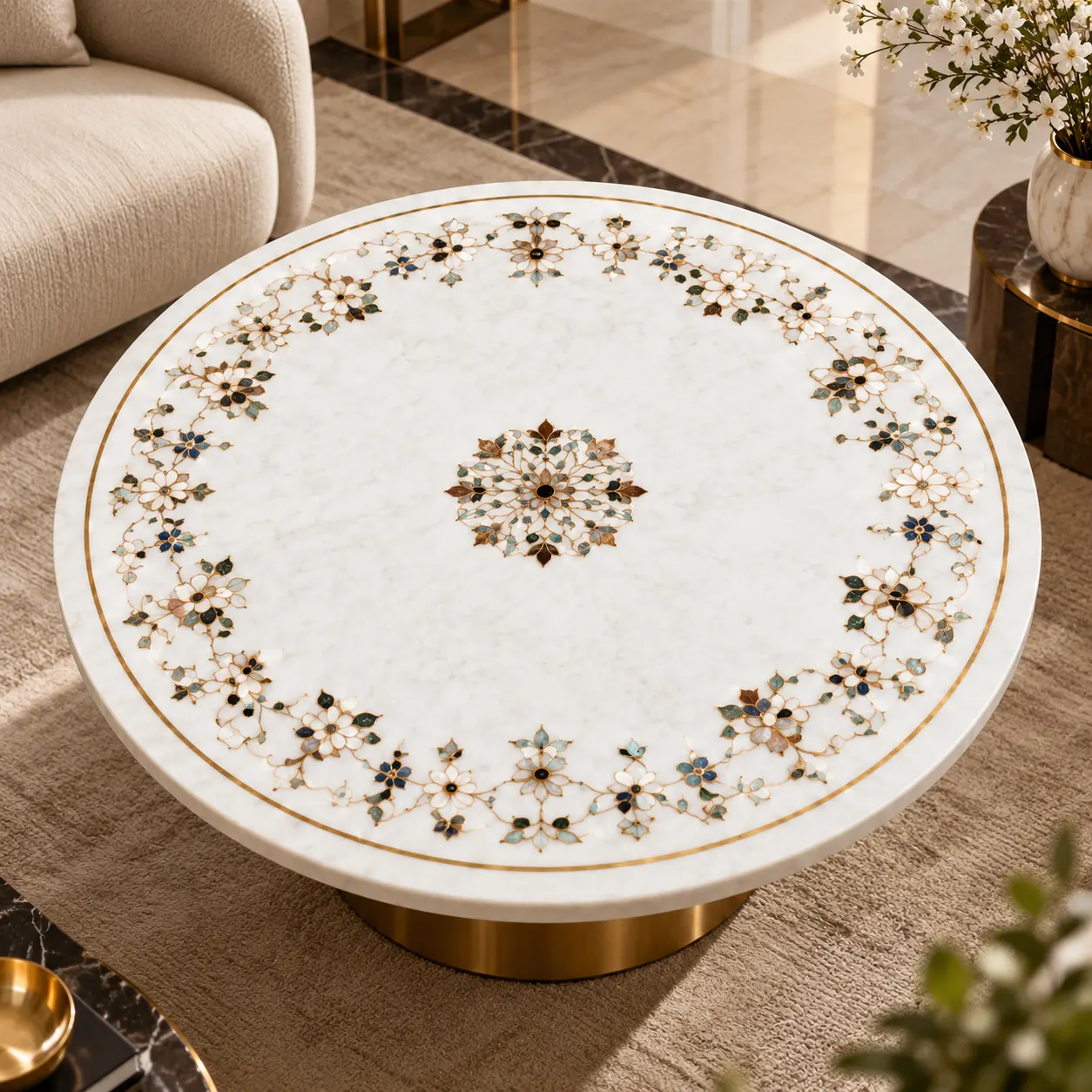
Handcrafted Marble Table Top
Discover handcrafted marble inlay table tops featuring intricate stone patterns and timeless artistry for luxury homes, bespoke furniture, and refined interiors.
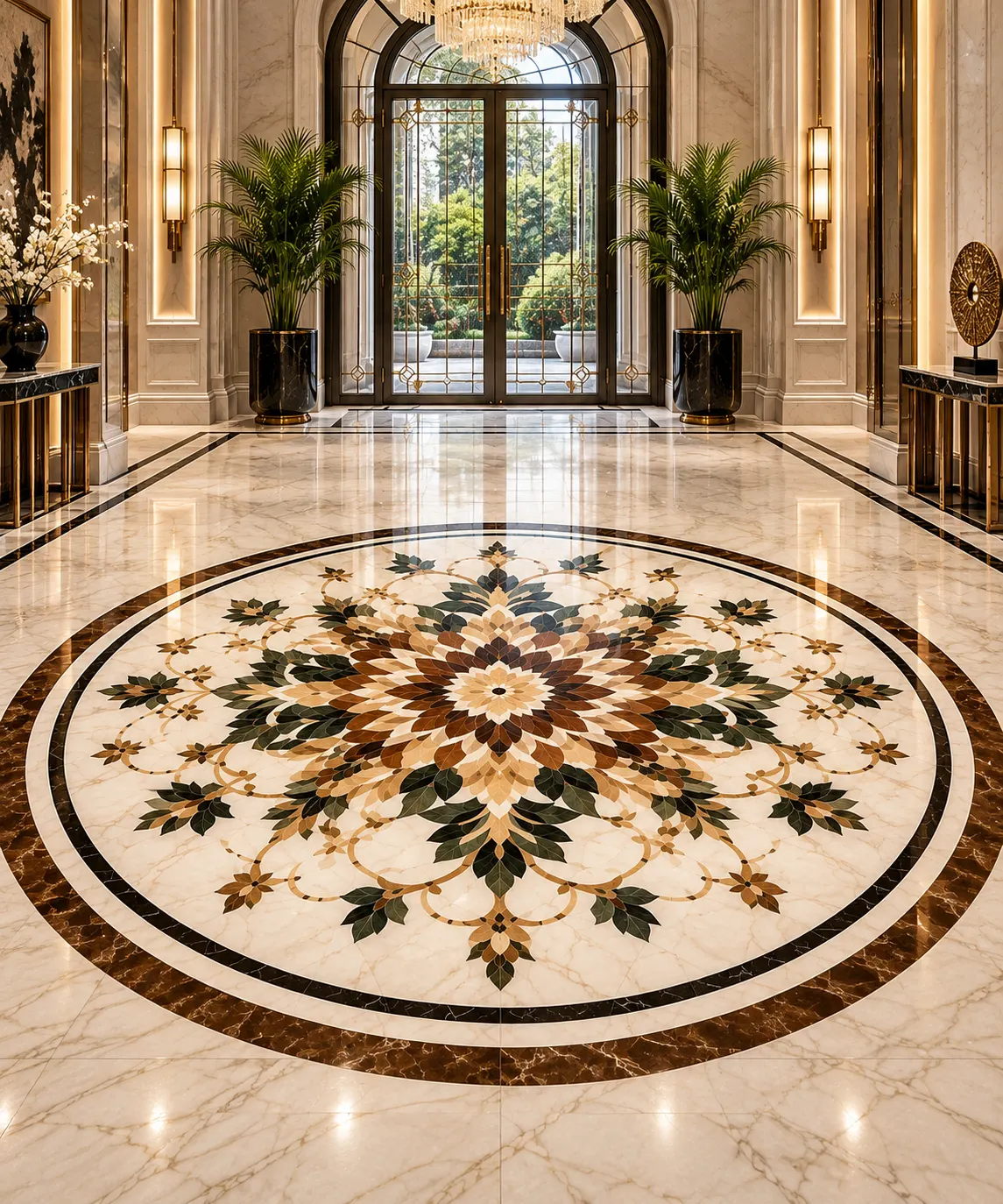
Marble Floor Inlay Art
Explore decorative marble floor inlay designs combining precision-cut natural stones and artistic patterns for elegant residences, luxury hospitality spaces, and architectural interiors.

Marble Inlay Wall Art
Transform interior spaces with artistic marble inlay wall panels and decorative stone compositions, thoughtfully designed for statement walls and sophisticated luxury interiors.
1. Marble Feature Walls for Elegant Living Rooms
A marble feature wall can bring depth and visual character to a luxury living room. Rather than covering every wall with decorative material, designers often select one prominent surface to establish the room’s visual identity.
The wall behind a sofa, fireplace or television unit is particularly suitable for this treatment. Large marble slabs with expressive natural veining create a sophisticated backdrop, while carefully selected colours help establish the desired atmosphere.
Popular design directions include:
- White marble feature walls: Ideal for bright, understated interiors with a timeless appearance.
- Dark marble walls: Deep brown, black and green stones introduce contrast and a dramatic visual presence.
- Bookmatched marble panels: Mirrored stone patterns create a balanced and symmetrical composition.
- Marble with metal detailing: Brass or bronze accents can introduce warmth and definition.
For a more artistic approach, a plain marble surface can be complemented with a decorative inlay panel. Floral motifs, geometric compositions and nature-inspired artwork can turn a feature wall into a distinctive design statement.
2. Marble Inlay Wall Art for Artistic Interiors
Marble inlay wall art offers a more detailed and expressive alternative to conventional marble cladding. This traditional decorative technique involves fitting carefully shaped pieces of coloured marble and ornamental stones into a marble base to create intricate patterns and compositions.
Often associated with the historic Pietra Dura tradition of India, marble inlay brings together material selection, precision cutting and detailed craftsmanship. The result can range from delicate floral arrangements to elaborate architectural panels and contemporary geometric artwork.
Popular marble inlay wall design ideas include:
- Floral marble inlay panels: Botanical patterns, flowering branches and stylised blooms create an elegant decorative feature.
- Geometric inlay compositions: Repeating forms and symmetrical arrangements suit contemporary and transitional interiors.
- Nature-inspired wall art: Birds, butterflies, leaves and other organic motifs introduce artistic character.
- Bespoke decorative panels: Custom compositions can be designed around a room’s dimensions, colour palette and architectural style.
- Large-scale marble murals: Multiple inlay sections can be arranged to form a continuous artistic composition.
Marble inlay is particularly effective when used selectively. A single handcrafted panel can become the centrepiece of a living room, entrance foyer, private lounge or hospitality reception area.
For inspiration, explore marble inlay wall art, including decorative possibilities for refined residential and commercial interiors.
3. Bookmatched Marble Walls for a Dramatic Effect
Bookmatching is a popular technique in luxury interior architecture. It involves placing two adjacent marble slabs so that their natural veining forms a mirrored pattern, creating a symmetrical visual effect.
This technique is particularly striking when used on large walls where the stone’s natural movement can be appreciated without interruption.
Bookmatched marble is frequently used in:
- Luxury living room feature walls
- Hotel reception areas
- Private dining rooms
- Master bedroom backdrops
- Executive offices and meeting spaces
White marble with grey veining offers a restrained, sophisticated appearance, while darker stones can create a more dramatic setting.
The success of bookmatching depends on careful slab selection. The two adjoining pieces should have compatible veining, colour and pattern movement. Proper planning before installation is essential to achieve a balanced result.
4. Marble Wall Panels for Luxury Hotel Lobbies
Hotel lobbies create the first impression of a hospitality property. Their interiors need to communicate the character, quality and design identity of the establishment.
Marble wall panels are particularly suitable for these spaces because they combine architectural presence with material durability. Large-format stone surfaces can establish a sense of scale, while decorative sections add individuality.
Some design approaches include:
- Full-height marble panels behind reception desks
- Symmetrical marble arrangements in entrance areas
- Decorative inlay artwork within large stone surfaces
- Contrasting marble borders and framed compositions
- Marble panels combined with warm architectural lighting
For boutique hotels, a carefully designed inlay mural can become a signature visual element. Larger hospitality properties may use coordinated marble patterns across reception areas, corridors and selected public spaces.
The objective should be to create a memorable interior without overwhelming the architecture.
5. Floor-to-Ceiling Marble Walls for Contemporary Villas
Floor-to-ceiling marble walls create a sense of continuity and architectural scale. They are especially effective in villas with generous ceiling heights, open-plan living spaces and carefully planned natural lighting.
Large marble slabs can visually extend the height of a room, while uninterrupted surfaces create a clean and sophisticated appearance.
Design possibilities include:
- Continuous marble walls in double-height living rooms
- Large stone panels behind staircases
- Full-height marble surfaces in entrance foyers
- Marble feature walls in private lounges
- Contrasting stone panels in open-plan interiors
For a more distinctive finish, designers can combine large marble surfaces with smaller decorative inlay sections. This creates a balance between the natural beauty of stone and the detail of traditional craftsmanship.
6. Marble Walls with Semi-Precious Stone Inlay
Semi-precious stones introduce additional colour, texture and visual richness to marble wall designs. Materials such as lapis lazuli, malachite, agate and mother of pearl can be incorporated into decorative compositions to create distinctive artistic details.
Each material has its own visual character:
| Material | Distinctive appearance | Design application |
|---|---|---|
| Lapis Lazuli | Rich blue colour, sometimes with golden pyrite inclusions | Floral details, borders and focal motifs |
| Malachite | Deep green colour with natural banded patterns | Botanical designs and decorative accents |
| Mother of Pearl | Iridescent surface with subtle colour reflections | Delicate floral elements and highlights |
| Agate | Natural layered patterns and varied colours | Geometric details and decorative motifs |
| Green Aventurine | Green tones with a subtle, granular appearance | Leaf patterns and ornamental compositions |
The combination of natural marble and selected ornamental stones allows designers to develop artwork with a distinctive colour palette.
Semi-precious stone inlay can be used in feature panels, framed wall compositions, decorative borders and bespoke murals. Material selection should consider the intended location, finish, lighting and maintenance requirements.
7. Marble Wall Designs for Luxury Hotel Suites
Hotel suites require a more personal and comfortable approach to luxury. Marble can be introduced through carefully selected surfaces rather than extensive decorative coverage.
In bedroom interiors, marble is often used behind the headboard to create a refined focal point. Softer colours and restrained patterns can maintain a relaxing atmosphere, while decorative inlay panels add individuality.
Suitable design ideas include:
- Light marble headboard walls
- Symmetrical marble panels with subtle veining
- Decorative inlay artwork integrated into bedroom walls
- Marble surfaces combined with upholstered sections
- Stone panels with warm concealed lighting
In larger suites, marble can also be introduced into private lounges, dressing areas and entrance foyers.
A successful hotel suite design balances visual richness with comfort. Natural stone should complement textiles, furniture, lighting and other interior finishes.
8. Minimalist Marble Wall Designs
Luxury does not always require elaborate patterns or dramatic materials. Minimalist marble walls can create an equally impressive effect through simplicity, proportion and material quality.
This approach works particularly well in contemporary homes, modern penthouses and boutique hospitality interiors.
Some minimalist design ideas include:
- Large-format white marble slabs with subtle veining
- Neutral beige and cream marble surfaces
- Simple horizontal or vertical stone divisions
- Narrow contrasting marble borders
- Minimal inlay details within otherwise plain surfaces
The key is to allow the stone’s natural character to remain the central feature.
Minimalist marble walls are also easier to coordinate with contemporary furniture, understated lighting and natural materials such as timber, linen and leather.
9. Marble Walls Combined with Wood and Metal
Combining marble with other materials creates visual contrast and helps prevent large stone surfaces from appearing overly formal.
Wood introduces warmth, while metal details can add precision and definition. Together, these materials create balanced interiors suited to luxury residences and hospitality environments.
Marble and wood
Natural wood panels soften the appearance of marble and create a welcoming atmosphere. This combination works particularly well in living rooms, hotel suites and private lounges.
Marble and brass
Brass trims, decorative inlays and metallic profiles can complement the natural veining of marble. Warm metallic finishes are particularly effective with cream, beige, brown and dark green stones.
Marble and glass
Glass elements introduce transparency and allow light to move through the space. They can be used alongside marble partitions, decorative panels and feature walls.
Marble and upholstered finishes
Fabric-covered wall sections can create a softer transition between stone surfaces and furniture. This combination is especially useful in bedrooms and hospitality suites.
Material combinations should be planned carefully so that each finish contributes to the overall architectural composition.
10. Decorative Marble Wall Borders and Framed Panels
Not every marble wall needs to be covered with a large slab or mural. Decorative borders and framed panels offer a more controlled way to introduce artistic detail.
A framed marble panel can be designed as an independent composition within a larger wall surface. Borders help define the artwork and create a visual connection with surrounding architectural elements.
Design possibilities include:
- Floral marble inlay borders
- Geometric ornamental frames
- Contrasting stone outlines
- Decorative corner motifs
- Repeated patterns across multiple wall sections
These details are particularly useful in entrance foyers, formal dining rooms, hotel corridors and reception spaces.
A coordinated border design can also connect different areas of an interior without repeating the same decorative panel throughout the property.
11. Marble Wall Art for Hotel Restaurants and Fine Dining Spaces
Restaurants within luxury hotels require interiors that create atmosphere and support the overall dining experience. Marble walls can introduce a sense of refinement, while decorative artwork helps establish a distinctive identity.
In fine dining spaces, marble can be used behind private dining tables, at entrance points or along selected feature walls.
Potential design approaches include:
- Nature-inspired marble inlay murals
- Symmetrical floral compositions
- Geometric stone patterns
- Dark marble walls with lighter decorative details
- Marble panels coordinated with timber and warm lighting
For restaurants with a specific cultural or architectural theme, bespoke marble artwork can help communicate the concept through material and design.
The scale of the artwork should be appropriate to the room. Large compositions suit spacious dining areas, while smaller framed panels can add detail to intimate private dining spaces.
12. Custom Marble Wall Designs for Bespoke Interiors
One of the greatest advantages of decorative marble is the possibility of developing designs around a specific architectural space.
Standard stone patterns may not always suit the dimensions, proportions or design language of a luxury project. Bespoke marble wall panels allow the composition to be planned according to the intended location.
Customisation may involve:
- Selecting the marble base and decorative stones
- Developing a pattern around the wall dimensions
- Adjusting the colour palette to match the interior
- Creating artwork based on floral, geometric or nature-inspired themes
- Planning multiple panels as a continuous composition
- Coordinating the wall design with flooring and tabletop details
For architects and interior designers, early coordination is important. Wall dimensions, electrical points, lighting positions, joints and installation requirements should be considered before finalising the artwork.
A well-planned bespoke panel can become an integral part of the architecture rather than an accessory added after the interior is complete.
13. Choosing the Right Marble for Wall Designs
The choice of marble influences the colour, visual weight and overall character of a wall.
Different stones offer different patterns, finishes and design possibilities. Some are better suited to subtle contemporary interiors, while others create a stronger decorative statement.
| Marble type | Visual character | Suitable interior style |
|---|---|---|
| Makrana Marble | Light appearance with a classic stone character | Traditional and contemporary luxury |
| Dark Emperador | Rich brown tones with contrasting veins | Warm, dramatic interiors |
| Pink Onyx | Soft pink tones and distinctive natural patterns | Decorative feature walls |
| Dark Green Marble | Deep green colour and natural veining | Statement walls and artistic panels |
| White Marble | Bright appearance with varied natural veining | Minimalist and timeless interiors |
| Blue Onyx | Distinctive blue tones and translucent character in suitable varieties | Decorative focal points |
The final selection should account for the intended finish, slab consistency, maintenance requirements and installation conditions. Natural stone varies from piece to piece, so reviewing actual samples or slabs is an important part of the design process.
14. Lighting Ideas for Marble Feature Walls
Lighting plays an important role in how marble appears within an interior. It can highlight natural veining, create depth and bring attention to decorative inlay details.
For luxury homes and hotels, lighting should be considered during the wall design stage rather than added as an afterthought.
Useful lighting approaches include:
Concealed linear lighting: Integrated lighting along the edges of a marble panel can create a subtle floating effect.
Wall washers: These fixtures illuminate larger stone surfaces evenly, helping reveal natural patterns and textures.
Accent spotlights: Directional lighting can draw attention to a particular decorative panel or artwork.
Backlighting: Certain translucent stone varieties may be suitable for backlit applications, subject to their thickness, construction and installation requirements.
Lighting colour temperature also matters. Warm lighting generally creates a welcoming atmosphere, while neutral lighting can help preserve the natural appearance of lighter stone. The final arrangement should avoid harsh reflections and uneven illumination.
15. Practical Considerations Before Installing Marble Wall Panels
Marble wall installations require proper planning, particularly when using large slabs or detailed inlay artwork.
Before beginning a project, consider the following factors:
- Wall preparation: The substrate should be structurally suitable, stable and properly prepared for the selected stone system.
- Weight and support: Large stone panels require appropriate support and fixing methods designed for their weight and dimensions.
- Panel layout: Slab selection, pattern continuity, joints and alignment should be planned before installation.
- Moisture conditions: Bathrooms and other wet areas require suitable stone selection, waterproofing and sealing where appropriate.
- Surface finish: Polished, honed and other finishes create different visual effects and maintenance requirements.
- Lighting coordination: Electrical points and concealed lighting should be integrated into the design before installation.
- Maintenance: Use cleaning products suitable for natural stone and avoid acidic cleaners that can damage marble surfaces.
For large commercial installations, the design should be reviewed by qualified stone installers and project professionals. Correct fixing systems and installation methods are essential for long-term performance and safety.
Marble Wall Design Comparison: Which Style Is Right for Your Space?
Different marble wall treatments serve different design purposes. The following comparison can help narrow down the right approach for a residential or hospitality project.
| Wall design | Overall appearance | Best suited for |
|---|---|---|
| Plain marble cladding | Clean and timeless | Contemporary homes and hotel suites |
| Bookmatched marble | Symmetrical and dramatic | Grand living rooms and hotel lobbies |
| Marble inlay wall art | Detailed and artistic | Feature walls and bespoke interiors |
| Semi-precious stone inlay | Rich and decorative | Premium residences and statement spaces |
| Marble and wood combination | Warm and balanced | Living rooms and hospitality lounges |
| Framed marble panels | Structured and elegant | Foyers, corridors and dining rooms |
| Floor-to-ceiling marble | Grand and architectural | Villas, penthouses and double-height spaces |
The best choice depends on the scale of the room, the surrounding materials, the desired atmosphere and the role the wall is expected to play within the interior.
Two Design Principles Worth Remembering
“Architecture is the learned game, correct and magnificent, of forms assembled in the light.” — Le Corbusier
This idea is particularly relevant to marble interiors, where the relationship between material, proportion and light determines the final visual effect.
“Simplicity boils down to two steps: Identify the essential. Eliminate the rest.” — Leo Babauta
In luxury interiors, a carefully selected marble surface or a single well-designed inlay panel can often create a stronger impression than excessive decoration.
Conclusion: Creating Timeless Interiors with Marble Wall Art
Marble wall design offers a remarkable range of possibilities for luxury homes, villas, hotels and other high-end spaces. From minimalist stone cladding and bookmatched slabs to elaborate marble inlay murals and semi-precious stone compositions, each approach creates a different architectural experience.
The most successful designs are those in which material, pattern, proportion and lighting work together. A marble wall should complement the character of the space while introducing a sense of permanence and individuality.
For projects that require a more artistic approach, marble inlay wall panels offer an opportunity to bring traditional Indian stone craftsmanship into contemporary architecture. Carefully selected colours, intricate motifs and bespoke compositions can transform a wall into a lasting work of decorative art.
Zenvira Atelier explores the meeting point of traditional marble inlay craftsmanship and refined interior design, with a focus on decorative marble applications for walls, floors and tabletops. For architects, interior designers and homeowners exploring distinctive stonework, visit Zenvira Atelier to discover marble inlay possibilities for thoughtfully designed spaces.
Contact Us:
WhatsApp Support (India): +91 9621292929
Business Email ID: info@zenviraatelier.com
Website: zenviraatelier.com
FAQ’s
1. What are the best marble wall design ideas for luxury homes?
Some of the most popular marble wall design ideas for luxury homes include full-height marble feature walls, bookmatched marble panels, decorative marble inlay artwork, geometric patterns, floral motifs and bespoke stone installations. Marble inlay wall panels are particularly suitable for creating distinctive statement walls in living rooms, entrance foyers, dining areas and luxury bedrooms.
2. What is marble inlay wall art?
Marble inlay wall art is a decorative technique in which carefully cut pieces of coloured marble, natural stones and semi-precious materials are fitted into a marble surface to create intricate patterns and artistic compositions. Inspired by traditional Pietra Dura craftsmanship, this technique transforms marble walls into decorative artworks featuring floral designs, geometric patterns, nature-inspired motifs and customised compositions.
3. Which marble is best for luxury wall designs?
The best marble depends on the desired appearance, interior style and project requirements. Popular choices include:
-
White Marble: Ideal for elegant, timeless and sophisticated interiors.
-
Black Marble: Creates dramatic contrasts and contemporary statement walls.
-
Beige Marble: Suitable for warm, understated luxury interiors.
-
Dark Emperador Marble: Adds rich brown tones and natural character.
-
Onyx Marble: Offers distinctive colours and striking natural patterns.
These materials can also be combined with coloured stones to create bespoke marble inlay wall artwork.
4. How can marble walls enhance luxury hotel interiors?
Marble walls can add visual sophistication, texture and architectural character to hotel interiors. They are commonly used in reception areas, grand lobbies, guest suites, restaurants, corridors and feature walls. Custom marble inlay panels, decorative stone murals and artistic wall installations can help hotels establish a distinctive interior identity and create memorable guest experiences.
5. What is the difference between marble wall cladding and marble inlay wall art?
Marble wall cladding involves covering a wall with marble slabs or panels to create a refined stone finish. Marble inlay wall art involves embedding carefully shaped pieces of contrasting stones into a marble base to create decorative patterns and artistic compositions. Cladding primarily enhances the architectural surface, while inlay introduces detailed craftsmanship and decorative artwork.
6. Are marble inlay wall panels suitable for modern interiors?
Yes. Marble inlay wall panels can complement both contemporary and traditional interiors. Modern applications include minimalist geometric patterns, abstract compositions, subtle floral artwork and customised stone designs. Neutral marble backgrounds combined with carefully selected coloured stones can create elegant statement walls without overwhelming the surrounding interior design.
7. Can marble wall designs be customised for hotels, villas and residential projects?
Yes. Bespoke marble wall designs can be customised according to project dimensions, architectural drawings, colour palettes and interior design concepts. Architects and interior designers can specify floral motifs, geometric patterns, decorative borders, artistic murals and large-format inlay panels. Customisation also allows the artwork to coordinate with flooring, furniture and other architectural finishes.
8. How much does a custom marble inlay wall panel cost?
The cost depends on the panel dimensions, marble quality, stone selection, design complexity, quantity of individual inlay pieces and finishing requirements. Intricate floral compositions and artwork incorporating semi-precious stones generally require more detailed craftsmanship than simple geometric designs. Transportation, structural support and installation requirements can also influence the overall project cost. Accurate quotations require dimensions, design references and material specifications.
9. How do you maintain marble wall panels and marble inlay artwork?
Marble wall panels should be cleaned regularly using a soft cloth and a pH-neutral cleaner suitable for natural stone. Avoid acidic chemicals, abrasive materials and harsh cleaning agents that may damage the marble surface or decorative inlay. For large installations, periodic professional inspection can help identify any issues with joints, supports or surface finishes.
10. Where can you find bespoke marble inlay wall art in India?
Agra is one of India’s most recognised destinations for traditional marble inlay craftsmanship. Architects, interior designers, homeowners and hospitality developers can explore specialist ateliers offering decorative marble wall panels, artistic murals, floral inlay compositions and customised stone installations.
Zenvira Atelier, based in Agra, India, focuses on marble inlay for walls, floors and tabletops. Combining traditional Indian stone artistry with contemporary design concepts, the atelier creates bespoke decorative solutions for luxury homes, villas, hotels and architectural interiors.
Explore the collections at www.zenviraatelier.com