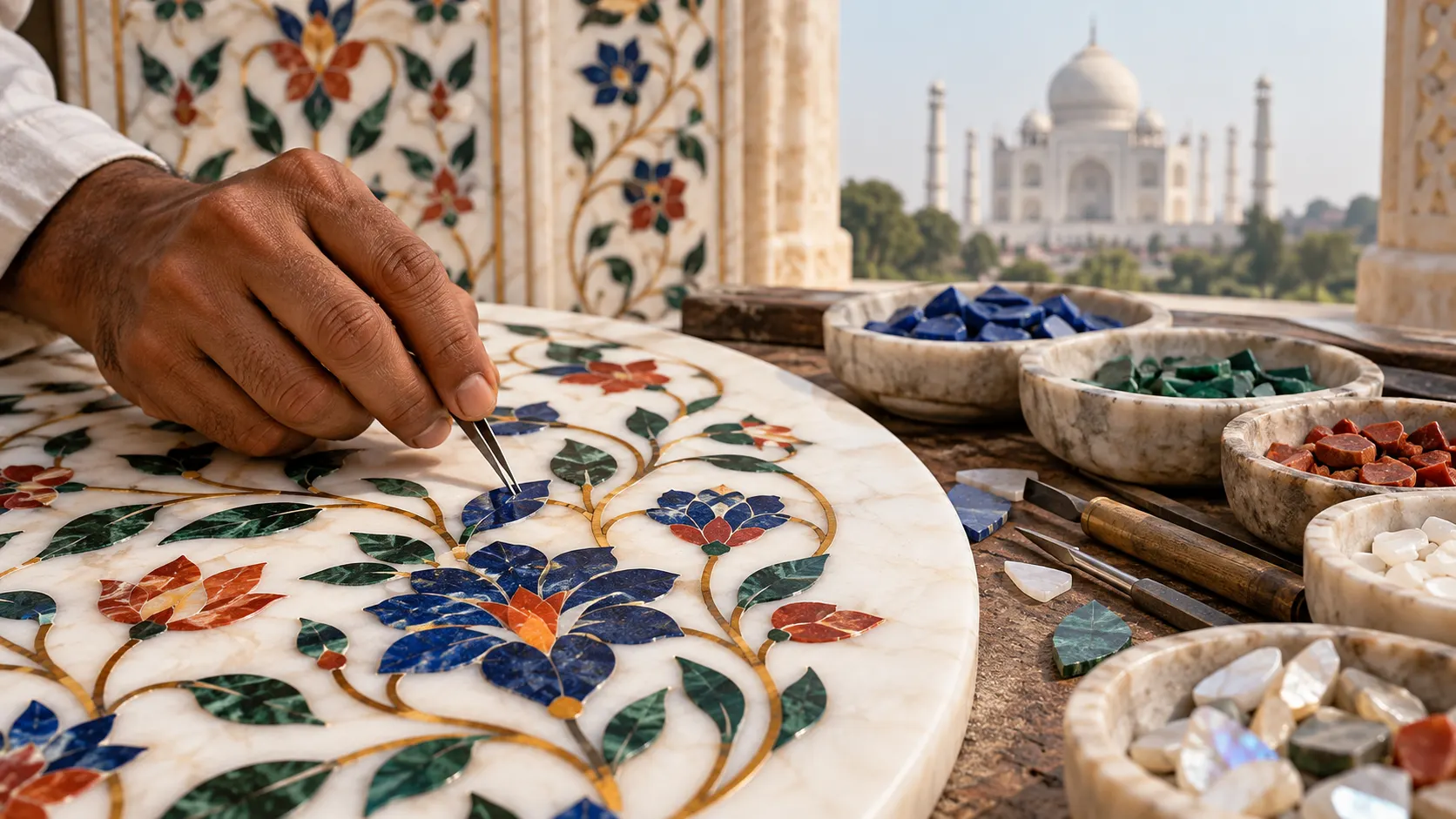
The beauty of natural stone lies not only in its colour and texture but also in the possibilities it offers for artistic expression. Among the finest examples of this relationship between material and craftsmanship is Pietra Dura, a decorative art in which carefully shaped pieces of coloured stone are inlaid into marble to create intricate designs.
From delicate floral patterns to elaborate architectural compositions, Pietra Dura transforms marble surfaces into works of art. The technique is particularly associated with India’s Mughal heritage, where skilled artisans developed a distinctive tradition of stone inlay that continues to inspire contemporary architecture and interior design.
Agra holds a special place in this story. The city’s association with the Taj Mahal and its rich tradition of marble inlay craftsmanship have made it an important centre for the preservation of this remarkable art form.
Today, marble inlay art is appreciated not only for its historical significance but also for its potential in modern spaces. Decorative wall panels, architectural flooring, statement tabletops and bespoke stone installations demonstrate how traditional craftsmanship can complement contemporary design.
Understanding Pietra Dura means exploring its origins, materials, techniques and evolving applications, as well as the skill required to bring each composition to life.
What Is Pietra Dura?
Pietra Dura is a decorative stone-inlay technique in which individually cut pieces of coloured stone are fitted into a stone base to form a pattern or image. The term is Italian and translates to “hard stone.”
In India, the related craft is widely known as Parchin Kari or Parchinkari. It became especially prominent during the Mughal period, when intricate stone inlay was incorporated into important architectural monuments.
Unlike painting, printing or surface decoration, Pietra Dura creates its designs using actual pieces of stone. Each element is shaped to fit a prepared recess in the marble, allowing the composition to become an integrated part of the surface.
The designs can include flowers, leaves, vines, birds, geometric patterns and elaborate ornamental arrangements. The colour comes from the natural characteristics of the selected stones, while the overall effect depends on their careful placement and the precision of the workmanship.
A finished marble inlay surface is generally polished so that the inlaid pieces and surrounding marble form a smooth, continuous plane.
The technique demands a combination of artistic judgement and technical accuracy. The artisan must understand the relationship between the design, the properties of different stones and the practical requirements of fitting each piece precisely.
This combination of material knowledge and detailed craftsmanship distinguishes Pietra Dura from many other decorative treatments.
The Origins and History of Pietra Dura
The history of Pietra Dura extends across different artistic traditions. Decorative stone-inlay techniques developed in Europe, particularly in Renaissance Italy, where workshops refined methods for creating elaborate compositions from coloured stones.
The Italian tradition became especially associated with Florence. Through cultural exchange and royal patronage, related techniques influenced decorative arts in other parts of the world.
In India, stone inlay acquired a distinctive identity under Mughal patronage during the seventeenth century. Artisans adapted the technique to local architectural traditions, materials and artistic preferences, creating the form commonly known as Parchin Kari.
The development of this craft was closely associated with the Mughal appreciation for marble architecture, intricate ornamentation and carefully balanced compositions.
The Taj Mahal and the Art of Stone Inlay
The Taj Mahal in Agra is one of the most celebrated examples of Pietra Dura in architectural design.
Commissioned by Emperor Shah Jahan in memory of Mumtaz Mahal, the monument was constructed during the seventeenth century and completed in stages between 1631 and 1653.
Its white marble surfaces incorporate intricate inlay patterns made from coloured stones. Floral compositions, decorative borders and carefully arranged details demonstrate the precision with which individual materials were integrated into the larger architectural design.
The effect is remarkable because the inlay complements rather than overwhelms the marble. From a distance, the patterns contribute to the monument’s elegance and symmetry; at close range, they reveal the complexity of the craftsmanship.
The Tomb of Itimad-ud-Daulah, another important monument in Agra, also features sophisticated marble inlay work and provides further evidence of the technique’s historical importance.
These monuments established a lasting association between Agra and decorative stone craftsmanship. The skills developed through generations of artisans continue to influence the design of contemporary marble inlay work.
From Royal Architecture to Contemporary Design
Historically, marble inlay was used to enrich monuments and other prestigious architectural settings. Its contemporary applications extend to residential interiors, hospitality projects and bespoke decorative surfaces.
The underlying principles remain familiar: a carefully considered design, suitable natural materials and precise execution. However, modern applications allow the technique to be adapted to different architectural styles, scales and functional requirements.
Traditional floral motifs can preserve a sense of historical continuity, while abstract patterns and restrained geometric compositions can create a more contemporary appearance.
This adaptability is an important reason why Pietra Dura remains relevant today.
Materials Used in Pietra Dura Marble Inlay
The choice of stone plays a fundamental role in determining the character of a marble inlay composition. Each material has its own colour, pattern, texture and physical properties.
White marble is frequently used as a background because it provides a clear contrast with coloured inlay pieces. Other marble colours can create different visual effects, from understated elegance to dramatic contrast.
Depending on the design, artisans may select from a range of natural stones and decorative materials.
- Makrana marble is associated with India’s historic marble architecture and is widely recognised for its use in traditional stonework.
- Lapis lazuli introduces a rich blue colour that can create striking accents within floral and geometric designs.
- Jasper offers a variety of natural colours that can contribute warmth and contrast to a composition.
- Carnelian is known for its reddish-orange tones, which can be used to create vibrant decorative details.
- Onyx provides distinctive colours and patterns, making it suitable for selected artistic applications.
- Green aventurine can introduce green tones into botanical motifs, including leaves and stems.
- Jade and other coloured stones may be incorporated where their appearance and physical properties suit the design.
- Mother of pearl offers an iridescent quality that can add subtle luminosity to particular decorative elements.
Not every material is suitable for every application. Stone selection must take account of the intended design, the dimensions of individual pieces, material availability and the conditions in which the finished surface will be used.
The best compositions achieve harmony between the background marble and the inlay materials. Rather than relying on colour alone, successful designs use proportion, contrast and detail to create a unified artistic expression.
How Is Pietra Dura Made?
Creating a marble inlay composition requires careful planning and a high level of precision. Although the process varies according to the design and application, the main stages illustrate the skill involved.
1. Design and Planning
The process begins with a drawing or design concept. It may feature floral patterns, botanical elements, geometric arrangements or more contemporary forms.
For architectural applications, the design must be considered in relation to the dimensions of the surface, the surrounding materials and the intended visual effect.
2. Selecting the Materials
The marble base and coloured stones are selected according to the composition. Their natural colours, patterns and physical characteristics influence the appearance and suitability of the finished piece.
Careful selection is particularly important when a design requires consistent colours or intricate details.
3. Cutting and Shaping the Stones
The chosen stones are cut into smaller pieces and shaped to match individual elements of the design.
Petals, leaves, curves and other details require different outlines. Each piece must be shaped accurately to minimise gaps and preserve the clarity of the composition.
4. Preparing the Marble Base
The design is transferred onto the marble surface. Recesses are then prepared to accommodate the individual inlay pieces.
The depth and shape of each recess must correspond to the material being fitted. This stage requires accuracy because poorly prepared recesses can affect the alignment and finishing of the work.
5. Fitting the Inlay Pieces
The shaped stones are placed into their corresponding recesses. Their alignment and fit are checked carefully, particularly where multiple pieces meet to form a continuous pattern.
This is one of the most demanding stages of the process. Even a small difference in shape or position can affect the appearance of the finished design.
6. Securing and Finishing
Once the pieces have been fitted, they are secured using suitable materials and methods. The surface is then finished and polished to achieve the desired smoothness.
The completed work is inspected for alignment, surface quality and consistency of the overall composition.
The time required depends on the size and complexity of the design. A simple motif and a large, highly detailed architectural panel involve very different levels of work.
Ultimately, the quality of Pietra Dura depends on the relationship between thoughtful design, suitable materials and precise execution.
Pietra Dura in Modern Architecture and Interior Design
Marble inlay offers opportunities to incorporate decorative artistry into contemporary spaces while retaining a connection to traditional craftsmanship.
Its application should be guided by the character of the interior, the intended function of the surface and the visual relationship between the inlay and the surrounding architecture.
Marble Inlay Wall Panels
Wall panels provide a particularly effective setting for intricate stone-inlay compositions. A carefully positioned floral panel can become a focal point in a living room, entrance hall, dining area or hospitality interior.
The design may be traditional, with elaborate botanical details, or contemporary, with simplified patterns and a restrained colour palette.
Scale is important. A larger composition may suit an expansive wall, while a more compact panel can complement a smaller architectural feature.
Marble inlay wall art can also be developed as part of a broader interior concept, with its colours and patterns coordinated with flooring, furniture and other materials.
Marble Inlay Flooring
Marble inlay flooring incorporates decorative patterns directly into the architectural surface. Floral medallions, geometric arrangements and ornamental borders can help define entrances, corridors and other areas.
Unlike wall art, flooring must respond to regular foot traffic and the practical requirements of installation. Stone selection, surface levels, joint details and the quality of the supporting base are therefore particularly important.
A well-planned inlay design can introduce visual interest while maintaining the overall coherence of the floor.
Marble Inlay Tabletops
Marble inlay tabletops bring together the natural beauty of stone and the precision of decorative craftsmanship.
A tabletop may feature a central floral composition, an ornamental border or a more contemporary pattern. The design can be adapted to coffee tables, dining tables, console tables and other furniture forms.
The relationship between the pattern and the shape of the tabletop is essential. A well-proportioned composition enhances the furniture without making the surface appear visually crowded.
The intended use must also be considered when choosing materials and finishing methods.
Bespoke Marble Inlay Installations
For larger residential and commercial projects, marble inlay can be incorporated into a coordinated architectural scheme.
Related motifs may be used across walls, floors and tabletops to establish visual continuity. Alternatively, a single distinctive panel or medallion can serve as the central decorative feature.
Such projects benefit from early coordination between the design concept, material selection, measurements and installation requirements.
The result can be a distinctive architectural surface that combines practical considerations with the expressive possibilities of natural stone.
Why Pietra Dura Remains Relevant Today
The continued appreciation of Pietra Dura comes from its ability to combine material authenticity with artistic individuality.
Natural stone has variations in colour, veining and texture that contribute to the character of each composition. The use of carefully shaped inlay pieces transforms these variations into a deliberate design.
The technique also offers considerable flexibility. It can accommodate traditional floral arrangements, geometric patterns and contemporary artistic ideas without losing its defining connection to stone craftsmanship.
For architects and interior designers, marble inlay provides an opportunity to introduce decorative detail that is integrated into the material itself rather than simply applied to the surface.
Its suitability for walls, floors and tabletops also allows the technique to be considered at different scales, from individual decorative elements to more extensive architectural installations.
However, the quality of the finished work depends on appropriate material selection, skilled execution, sound installation and suitable maintenance. These factors are especially important for surfaces exposed to frequent use.
When these considerations are addressed carefully, marble inlay can contribute distinctive character to an interior while preserving a connection to India’s rich artistic heritage.
Conclusion: The Enduring Art of Marble Inlay
Pietra Dura represents a remarkable relationship between natural stone, artistic imagination and precision craftsmanship. From the historic monuments of Agra to contemporary architectural surfaces, the technique demonstrates how marble can become a medium for detailed and expressive design.
Its enduring appeal lies in the combination of material beauty and skilled execution. Every composition requires careful consideration of colour, proportion, stone selection and the relationship between individual elements.
As modern interiors continue to explore natural materials and distinctive decorative features, marble inlay remains a meaningful way to bring artistic detail into architectural spaces.
“True beauty in stone emerges when natural materials and human craftsmanship come together in perfect harmony.”
“Every carefully placed piece of stone contributes to a larger story, transforming a simple surface into an expression of patience, precision and art.”
At Zenvira Atelier, based in Agra, India, this relationship between traditional artistry and contemporary interiors informs the brand’s focus on marble inlay for walls, floors and tabletops. The aim is to bring the visual character of stone craftsmanship into refined spaces through thoughtful decorative concepts.
For architects, interior designers, hospitality developers and homeowners exploring marble inlay for their projects, Zenvira Atelier offers a point of connection with this distinctive artistic tradition.
Discover the possibilities of marble inlay wall art, flooring and tabletops at https://zenviraatelier.com/.
Discover Marble Inlay Art with Zenvira Atelier
Rooted in the artistic heritage of Agra, Zenvira Atelier brings together the timeless appeal of natural stone and the refined possibilities of contemporary design. Our focus on marble inlay for walls, floors and tabletops reflects an appreciation for detailed craftsmanship, distinctive materials and thoughtfully designed interiors.
Whether you are an architect developing a bespoke interior concept, an interior designer sourcing distinctive decorative surfaces, a hospitality professional planning an exceptional space, or a homeowner looking for something individual, marble inlay offers a compelling way to introduce artistry into architecture.
At Zenvira Atelier, we invite you to explore the possibilities of marble inlay and discover designs that complement your project’s character, scale and aesthetic vision.
Begin Your Marble Inlay Project
Explore our collections and connect with Zenvira Atelier to discuss your requirements for marble inlay wall panels, decorative flooring, tabletops and bespoke design concepts.
Website: www.zenviraatelier.com
For project enquiries and further information, please visit our website and reach us through the contact options available there.
FAQs
1. What is Pietra Dura?
Ans- Pietra Dura is a traditional decorative art in which carefully cut pieces of coloured stones, semi-precious gemstones and other natural materials are fitted into a marble or stone surface to create intricate patterns, floral motifs and artistic designs. This technique is renowned for its precision, craftsmanship and timeless beauty, particularly in Indian marble inlay art.
2. What is the difference between Pietra Dura and marble inlay?
Ans- Pietra Dura is a specific form of stone inlay artistry in which precisely shaped pieces of coloured stones are fitted into a base, often marble, to create detailed decorative compositions. Marble inlay is a broader term for decorative work involving the insertion of contrasting materials into marble. The two terms are frequently used interchangeably when discussing traditional Indian stone inlay.
3. Where did Pietra Dura art originate in India?
Ans- Pietra Dura became especially prominent in India during the Mughal period. Agra developed into an important centre for this art, with the Taj Mahal serving as one of the most celebrated examples of intricate marble inlay craftsmanship. The tradition continues through skilled artisans who create decorative panels, tabletops, flooring and architectural installations.
4. How is Pietra Dura marble inlay made?
Ans- Pietra Dura is created through a detailed, multi-stage process. Artisans first prepare the design, select suitable stones, cut the individual pieces into precise shapes, and carefully fit them into corresponding recesses in the marble surface. The composition is then secured, finished and polished to create a smooth surface with intricate patterns and contrasting natural colours.
5. Which stones are used in Pietra Dura marble inlay?
Ans- Common materials include white marble, lapis lazuli, malachite, turquoise, agate, jasper, onyx and other coloured natural stones. Mother-of-pearl may also be incorporated into certain decorative inlay designs. The choice of materials depends on the desired colours, pattern, application and overall artistic effect.
6. What are the most popular uses of Pietra Dura art?
Ans- Pietra Dura is used in a wide range of decorative and architectural applications, including:
-
Marble inlay wall panels and wall art
-
Marble inlay flooring and medallions
-
Marble inlay tabletops and dining tables
-
Decorative borders and architectural features
-
Bespoke marble artwork and ornamental installations
Its versatility makes it suitable for luxury residences, hotels, heritage-inspired interiors and distinctive commercial spaces.
7. Why is Pietra Dura marble inlay so expensive?
Ans- The cost of Pietra Dura depends on the complexity of the design, the quality and type of stones, the size of the installation, and the time required for skilled craftsmanship. Intricate patterns involving numerous individually cut stone pieces demand considerable precision and labour. Custom designs, premium materials and large architectural installations can further increase the overall cost.
8. Is Pietra Dura still made by artisans in India today?
Ans- Yes. Pietra Dura and traditional marble inlay continue to be practised by skilled artisans in India, particularly in Agra, which has a long association with this craft. Contemporary applications combine traditional stone-cutting and inlay techniques with modern interior design requirements, allowing the art to be incorporated into bespoke wall panels, floors, tabletops and decorative features.
9. How do you maintain Pietra Dura marble inlay?
Ans- Regularly clean Pietra Dura surfaces with a soft cloth and a pH-neutral stone cleaner. Avoid acidic cleaners, abrasive materials and harsh chemicals that may damage the marble or affect its finish. For flooring and tabletops, use appropriate protective measures to minimise scratches and staining. Large installations and valuable antique pieces may require professional stone-care advice.
10. Where can you find bespoke Pietra Dura marble inlay art in India?
Ans- Agra is one of India’s best-known destinations for traditional marble inlay craftsmanship. Buyers seeking bespoke designs can explore specialist ateliers that work with marble inlay wall panels, architectural flooring, decorative medallions and custom tabletops. Zenvira Atelier focuses on marble inlay for walls, floors and tabletops, bringing traditional stone artistry into refined contemporary interiors through carefully considered designs and craftsmanship.