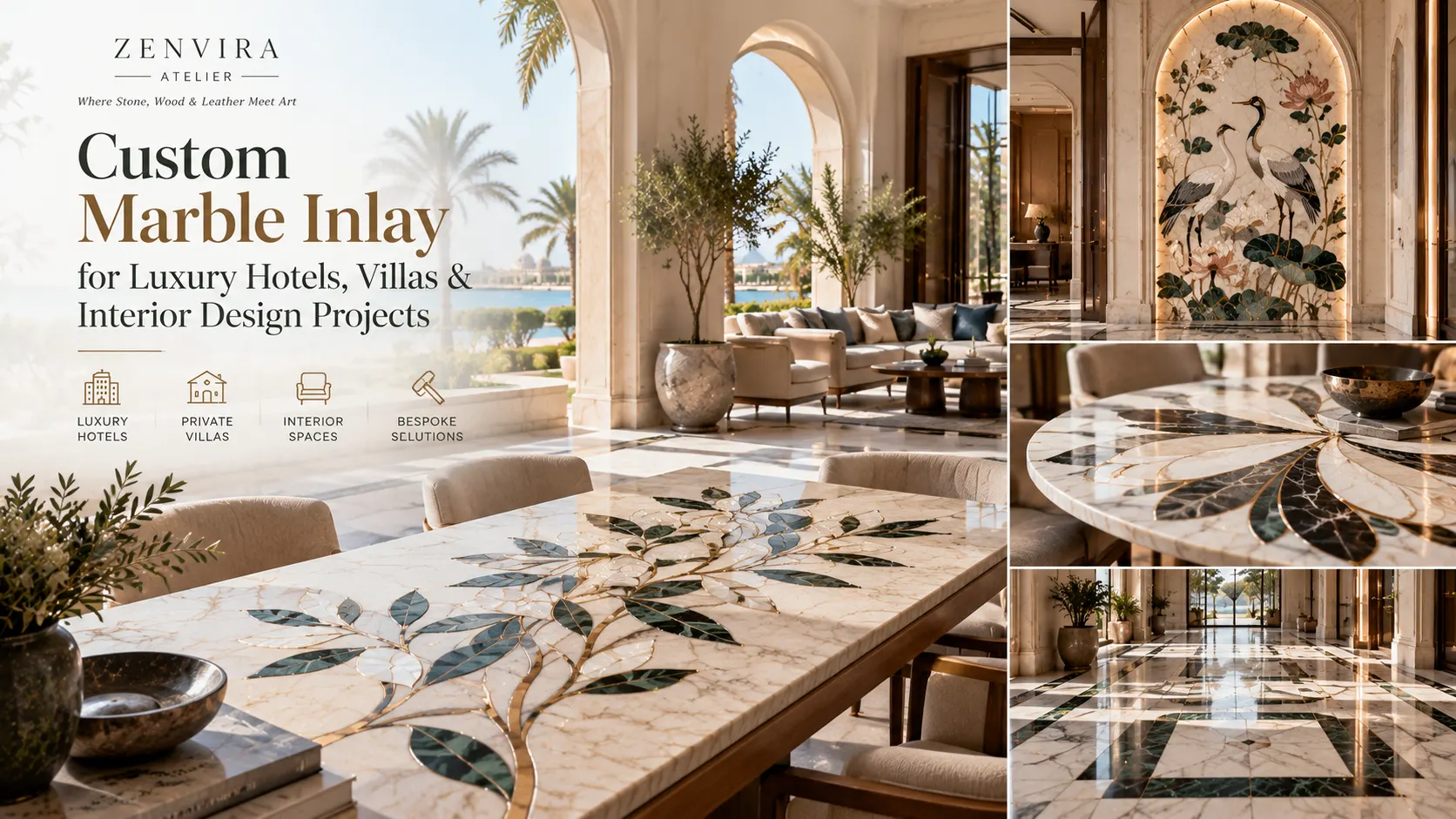
Luxury architecture is defined by more than impressive dimensions or expensive materials. The most memorable spaces bring together thoughtful design, natural materials, artistic detail and a strong sense of identity. Custom marble inlay offers a distinctive way to achieve this balance, transforming stone surfaces into decorative features that complement the architecture and character of an interior.
Rooted in the heritage of traditional stone craftsmanship, marble inlay combines natural marble with carefully shaped pieces of coloured stone to create intricate patterns, floral compositions, geometric designs and bespoke artwork. In India, this art form is particularly associated with Agra, where the marble inlay work of historic Mughal monuments continues to inspire contemporary design.
Today, custom marble inlay is increasingly relevant to luxury hospitality interiors, private villas, high-end residences and bespoke interior design projects. From grand hotel entrances and elegant reception areas to statement walls, decorative flooring and handcrafted tabletops, each application offers an opportunity to introduce individual character into a space.
For architects, interior designers, hospitality developers and property owners, bespoke marble inlay provides a way to combine natural materials with artistic expression while developing a coherent design language across an interior.
Custom Marble Inlay Applications at a Glance
| Application | Design possibilities | Important considerations |
|---|---|---|
| Hotel entrances and lobbies | Floor medallions, ornamental borders and geometric compositions | Traffic, floor layout and installation |
| Luxury villa foyers | Bespoke medallions and decorative floor patterns | Proportions, surrounding finishes and visual balance |
| Hotel reception walls | Floral panels and contemporary stone artwork | Panel dimensions, lighting and fixing requirements |
| Villa living rooms | Decorative marble wall panels | Furniture layout, colour palette and viewing distance |
| Dining and lounge areas | Coordinated wall, floor and tabletop designs | Design continuity and practical use |
| Custom tabletops | Central motifs, borders and bespoke patterns | Furniture dimensions, edges and maintenance |
| Large interior projects | Coordinated inlay across selected surfaces | Drawings, material planning and installation coordination |
Each application requires an individual approach. The same decorative pattern may not be appropriate for every surface, which is why dimensions, materials and intended use should be considered together.
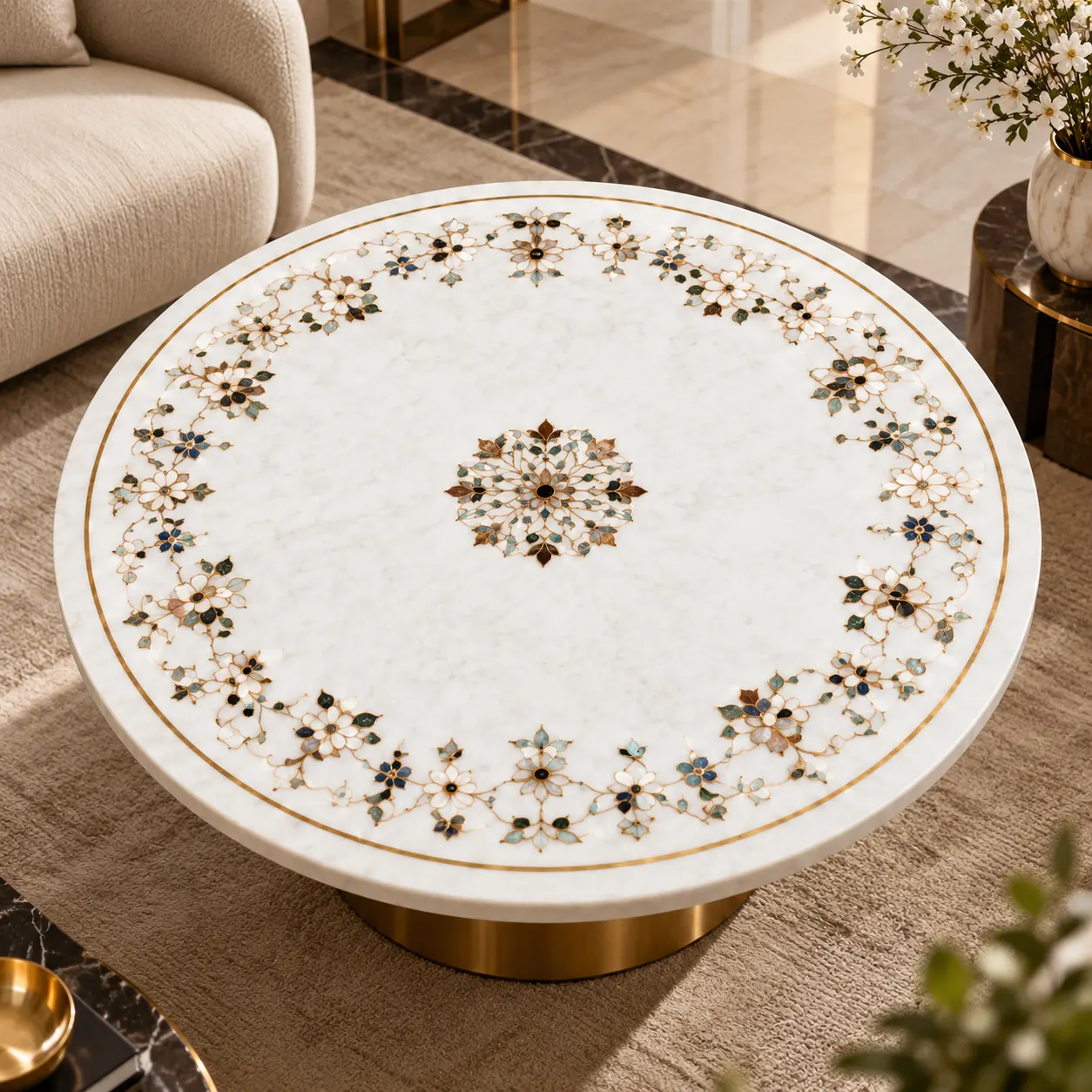
Handcrafted Marble Table Top
Discover handcrafted marble inlay table tops featuring intricate stone patterns and timeless artistry for luxury homes, bespoke furniture, and refined interiors.
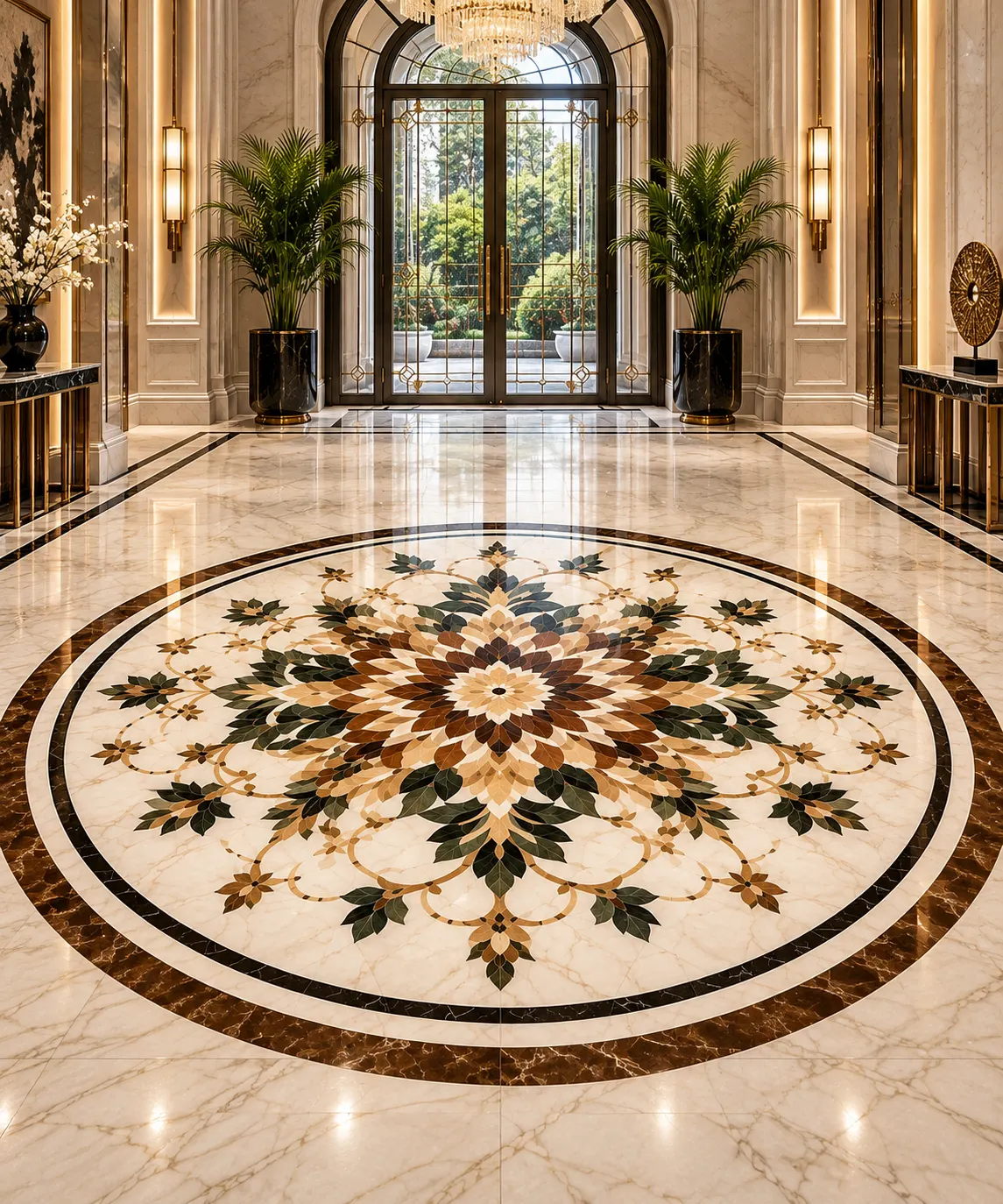
Marble Floor Inlay Art
Explore decorative marble floor inlay designs combining precision-cut natural stones and artistic patterns for elegant residences, luxury hospitality spaces, and architectural interiors.

Marble Inlay Wall Art
Transform interior spaces with artistic marble inlay wall panels and decorative stone compositions, thoughtfully designed for statement walls and sophisticated luxury interiors.
What Is Custom Marble Inlay?
Custom marble inlay is a decorative stone technique in which carefully shaped pieces of coloured stone are fitted into a prepared base, typically marble, to create a specific design.
The technique is associated with Pietra Dura, a traditional form of hardstone inlay known for its intricate patterns and detailed compositions. In India, a related tradition is widely known as Parchin Kari or Parchinkari.
Unlike printed patterns or surface decoration, marble inlay incorporates individual pieces of stone into the composition itself. The pieces are shaped to match the design, fitted into corresponding recesses and finished to create an integrated decorative surface.
A custom design may feature traditional floral motifs, symmetrical geometric patterns, ornamental borders or contemporary abstract forms. The selection of stones and the arrangement of colours determine the final visual effect.
The defining feature of bespoke marble inlay is its relationship with the intended space. Rather than selecting a decorative pattern without considering its surroundings, the design can be developed around the dimensions, architectural style, colour palette and intended function of a particular surface.
This makes marble inlay a considered choice for projects where material quality, individuality and detailed craftsmanship are central to the design.
Why Luxury Hotels Choose Bespoke Marble Inlay
Hotels create their identity through the experience of their spaces. The entrance, reception, corridors, restaurants and guest suites all contribute to the atmosphere visitors encounter.
Custom marble inlay can support this experience by introducing decorative elements that reflect the hotel’s architectural language and design concept.
Creating a Memorable Hotel Entrance
The entrance is often the first architectural feature guests notice. A carefully designed marble floor medallion, decorative border or inlaid stone feature can establish a sense of arrival.
For grand hotel lobbies, a circular medallion or symmetrical composition may complement the proportions of the space. In contemporary hospitality environments, a more restrained geometric design can introduce detail without overwhelming the architecture.
The pattern, dimensions and stone colours should be considered in relation to the surrounding flooring, lighting, furniture and reception desk.
Distinctive Reception and Lobby Interiors
Hotel lobbies often combine multiple functions, from guest reception to informal seating and circulation. Marble inlay can help define these areas through decorative flooring or carefully positioned wall panels.
A feature wall may introduce a distinctive artistic element behind the reception desk, while a floor design can establish a visual focal point within the lobby.
The objective is to create a coherent interior in which the decorative stonework complements the broader architectural concept.
Luxury Restaurants and Lounge Areas
In hotel restaurants, bars and lounges, material selection contributes significantly to the atmosphere. Marble inlay can introduce a decorative element that complements natural stone, wood, metal finishes and carefully selected furniture.
Depending on the concept, the design may be traditional and ornamental or contemporary and understated.
For hospitality projects, the selected materials and installation methods must also be suitable for the intended conditions, including cleaning requirements, foot traffic and regular use.
Custom Marble Inlay for Luxury Villas
Private villas offer a different opportunity for bespoke marble inlay. Unlike many large hospitality projects, a villa can be designed around the preferences of its owners, allowing decorative elements to reflect a more individual aesthetic.
Grand Entrance and Foyer Designs
A villa entrance can benefit from a marble inlay medallion or a decorative floor composition that complements the proportions of the foyer.
The design may incorporate floral arrangements, geometric patterns or a restrained ornamental border. Light-coloured marble with carefully selected stone accents can create a different atmosphere from darker marble paired with contrasting inlay.
The composition should work with the staircase, entrance doors, lighting and surrounding finishes to establish a balanced first impression.
Statement Walls in Living Rooms
A bespoke marble inlay wall panel can serve as an artistic focal point in a formal living room, drawing attention to the relationship between natural stone and decorative detail.
Traditional floral compositions may suit interiors inspired by classical architecture, while simplified geometric designs can complement contemporary villas.
Panel dimensions, colour combinations and the placement of the artwork should be planned according to the available wall area and the room’s proportions.
Elegant Dining Areas and Private Lounges
Marble inlay can also introduce detail into dining areas, private lounges and other carefully designed spaces.
A decorative floor border or an individual wall panel may help establish a distinct visual identity without introducing excessive ornamentation.
The most successful designs balance the intricacy of the artwork with the surrounding materials and furnishings.
Bespoke Marble Inlay Tabletops
Handcrafted marble inlay tabletops can complement dining rooms, living areas, entrance halls and private lounges.
A custom tabletop may feature a central motif, a decorative border or a more contemporary composition. The design can be developed around the dimensions and shape of the furniture.
For villas where the interior follows a consistent design theme, the tabletop’s stone colours and patterns can be coordinated with nearby flooring or wall finishes.
Marble Inlay for Interior Design Projects
For interior designers, marble inlay offers a material-led approach to decorative detailing. It can be used as an individual feature or incorporated into a larger design scheme.
The flexibility of the technique allows the artwork to respond to different architectural styles, from classical and transitional interiors to contemporary residential and commercial spaces.
Coordinating Multiple Surfaces
One approach is to develop related motifs for walls, floors and tabletops. A floral pattern used in a floor medallion, for example, may inspire a more simplified composition for a wall panel.
The designs do not need to be identical. Using a consistent material palette or related geometric forms can create visual continuity while allowing each surface to retain its individual purpose.
Designing Around Architectural Proportions
Bespoke marble inlay should be developed in relation to the space in which it will be installed.
A large wall panel may require a composition with clearly defined focal points, while a narrow corridor may benefit from a linear design. A small tabletop often requires a more compact arrangement than a spacious entrance floor.
Considering the dimensions early helps ensure that the decorative work feels integrated with the architecture.
Selecting a Suitable Design Language
Traditional floral artwork can introduce historical references and ornamental detail. Geometric designs may support contemporary architectural lines, while abstract patterns offer opportunities for a more individual artistic expression.
The selection should reflect the project’s intended atmosphere rather than follow a single decorative trend.
Explore marble inlay wall art at Zenvira Atelier:
https://zenviraatelier.com/subcategory/wall-art
Choosing Materials for Luxury Marble Inlay
The selection of marble and coloured stones has a significant influence on the finished composition. Different materials offer distinct colours, patterns and visual qualities.
White and ivory marble can provide a light background, while beige and darker marbles may complement warmer or more dramatic interiors.
Coloured stones can be selected to introduce contrast or reinforce the overall palette. Depending on the design, materials may include lapis lazuli, green aventurine, jasper, onyx, carnelian and mother of pearl.
The choice should consider more than appearance. The physical properties of each material, its compatibility with the base and its suitability for the intended application must also be evaluated.
For example, a decorative wall panel may have different performance requirements from a floor surface exposed to regular foot traffic. A tabletop may require particular attention to finishing, cleaning and everyday use.
A well-considered material palette creates a harmonious composition in which the stones complement one another and the surrounding interior.
From Design Concept to Handcrafted Installation
A custom marble inlay project involves several stages, each contributing to the quality and suitability of the finished work.
Design development: The pattern is developed around the architectural setting, project dimensions and desired visual effect.
Material selection: Marble and coloured stones are selected according to the design and intended application.
Precision cutting: Individual stone pieces are shaped to match the outlines of the composition.
Surface preparation: Recesses are prepared in the marble base to accommodate the inlay elements.
Fitting and finishing: The pieces are positioned and secured, and the surface is finished to achieve the intended appearance.
Quality inspection and installation: The completed work is checked for alignment, dimensions and finish before being integrated into the architectural setting.
For hotel and villa projects, coordination between design, material selection and installation is particularly important. Large panels, floor medallions and other architectural elements may require detailed drawings, accurate measurements and planning for transport and positioning.
Early coordination helps ensure that the final installation fits the intended space and works with the surrounding materials.
Balancing Artistic Detail with Practical Requirements
Although marble inlay is valued for its visual character, luxury interiors must also perform well in everyday use.
Hotel flooring, for example, may experience substantial foot traffic and frequent cleaning. The selected stone, finish and installation method should therefore be appropriate for the environment.
Wall panels require attention to their weight, dimensions, supporting structure and fixing method. Tabletops need suitable finishing and care according to their intended use.
Maintenance should be considered during the design stage rather than after installation. Cleaning products and procedures must be compatible with the particular marble and decorative stones.
The goal is to achieve a balance between artistic expression and the practical requirements of the space. Thoughtful planning allows the decorative work to contribute to the interior without compromising its intended function.
“Exceptional interiors are created when every material has a purpose and every detail contributes to the character of the space.”
This principle is especially relevant to bespoke stonework. A decorative feature is most effective when it relates naturally to the architecture, materials and overall design concept.
Marble Inlay and the Value of Bespoke Design
Standard decorative finishes can provide an effective solution for many projects, but bespoke marble inlay offers the opportunity to develop a composition around a specific architectural brief.
The dimensions can be adapted to the intended surface, the colours can be selected to complement the interior and the pattern can be developed according to the desired visual character.
This is particularly useful in hospitality and residential projects where the designer wants a distinctive focal point or a consistent design language across multiple spaces.
Bespoke design also encourages a closer consideration of materials and proportions. Instead of treating decoration as a final addition, it becomes part of the architectural planning process.
For luxury hotels, villas and high-end interiors, this approach can help create spaces that feel considered, cohesive and individual.
Zenvira Atelier: Marble Inlay for Refined Interiors
Based in Agra, India, Zenvira Atelier focuses on marble inlay for walls, floors and tabletops, bringing the visual language of traditional stone craftsmanship into contemporary architectural settings.
The atelier’s approach centres on natural materials, artistic composition and the relationship between decorative surfaces and the spaces they occupy.
For luxury hotels, private villas and interior design projects, marble inlay offers different possibilities, from a distinctive entrance floor to an intricate wall panel or a carefully designed tabletop. Each application can be considered in relation to the project’s dimensions, colour palette and architectural character.
At Zenvira Atelier, the enduring appeal of marble inlay lies in the connection between India’s artistic heritage and contemporary interior design. The craft provides an opportunity to introduce detail, individuality and the natural character of stone into carefully considered spaces.
Whether you are planning a hospitality interior, developing a luxury residence or exploring decorative stonework for a bespoke design project, understanding the possibilities of marble inlay is a valuable starting point.
Discover marble inlay for your next project at Zenvira Atelier.
For project enquiries, visit the website to connect with the atelier and discuss your requirements for marble inlay wall panels, flooring, tabletops and bespoke decorative concepts.
“When natural stone becomes a canvas for thoughtful design, craftsmanship transforms an architectural surface into something truly distinctive.”
Contact Us:
WhatsApp Support (India): +91 9621292929
Business Email ID: info@zenviraatelier.com
FAQs
1. What is custom marble inlay for luxury interiors?
Ans- Custom marble inlay is a decorative art technique in which precisely cut pieces of coloured natural stone and other decorative materials are fitted into a marble surface to create bespoke patterns and artistic designs. In luxury interiors, it is used to enhance walls, floors, tabletops and architectural features with distinctive craftsmanship tailored to the project’s design, dimensions and aesthetic requirements.
2. How is marble inlay used in luxury hotels?
Ans- Marble inlay is used in luxury hotels to create elegant reception areas, decorative lobby flooring, statement wall panels, floor medallions, restaurant tabletops and bespoke architectural features. Custom designs can complement a hotel’s interior concept, reinforce its visual identity and introduce distinctive artistic details into guest-facing spaces.
3. Can marble inlay be customised for luxury villas?
Ans- Yes. Bespoke marble inlay can be designed specifically for luxury villas, including entrance flooring, living room feature walls, dining tabletops, decorative borders and statement medallions. Patterns, stone colours, dimensions and motifs can be coordinated with the villa’s architectural style, furniture, lighting and overall interior palette.
4. What are the benefits of marble inlay for interior design projects?
Ans- Marble inlay offers several benefits for luxury interior design projects:
-
Customisation: Designs can be tailored to specific dimensions and project requirements.
-
Distinctive aesthetics: Natural stone colours and intricate patterns create visual interest.
-
Versatility: Suitable for walls, floors, tabletops and selected architectural applications.
-
Timeless appeal: Traditional craftsmanship complements both classic and contemporary interiors.
-
Design continuity: Coordinated motifs can connect different spaces within a property.
The final result depends on the quality of the materials, craftsmanship, installation and maintenance.
5. Which marble and stones are suitable for custom inlay projects?
Ans- Common materials include white marble, black marble, Dark Emperador marble, onyx, lapis lazuli, agate, jasper, green aventurine and other coloured natural stones. The selection depends on the desired colour palette, design complexity, budget and intended application. For hotel flooring and other high-traffic areas, material durability, slip resistance and maintenance requirements should also be assessed.
6. How much does custom marble inlay cost for hotels and villas?
Ans- The cost depends on the artwork’s dimensions, stone selection, design complexity, quantity, finishing requirements and installation conditions. Intricate floral patterns and large bespoke wall panels generally require more detailed work than simpler geometric designs. Hotel and villa projects may also involve site measurements, technical drawings, samples, transportation and professional installation. A detailed quotation requires the project’s specifications and design references.
7. Can architects and interior designers request bespoke marble inlay designs?
Ans- Yes. Architects and interior designers can specify custom marble inlay designs according to architectural drawings, material schedules, dimensions, colour palettes and project concepts. Depending on the project, the design process may include artwork proposals, material samples, technical coordination and installation planning. Early coordination helps align the artwork with the surrounding finishes and construction requirements.
8. Is marble inlay suitable for large-scale commercial and hospitality projects?
Ans- Marble inlay can be incorporated into large-scale hospitality and commercial interiors, including hotel lobbies, luxury restaurants, reception areas, boutique resorts and premium commercial spaces. Successful implementation requires careful planning of panel dimensions, substrate preparation, joint placement, structural support and installation sequencing. Material selection should reflect the expected foot traffic, cleaning routines and operating environment.
9. How do you maintain marble inlay in luxury hotels and villas?
Ans- Regular maintenance includes dust removal, cleaning with a suitable pH-neutral stone cleaner and promptly wiping spills from tabletops and other exposed surfaces. Acidic chemicals, harsh cleaning agents and abrasive tools should be avoided. Flooring in busy hotel areas may need a planned stone-care programme, while large wall panels should be inspected periodically for any installation-related issues.
10. Where can you source custom marble inlay for luxury hotels, villas and interior design projects in India?
Ans- Agra is one of India’s best-known centres for traditional marble inlay craftsmanship. Architects, interior designers, hospitality developers and villa owners can explore specialist ateliers for bespoke marble inlay wall panels, decorative flooring, floor medallions and artistic tabletops.
Zenvira Atelier, based in Agra, India, focuses on marble inlay for walls, floors and tabletops. The atelier brings traditional stone artistry into contemporary luxury interiors through design-led decorative solutions for residential, hospitality and architectural projects.
Explore the collections at www.zenviraatelier.com.